
In this article, we examine some of the most common challenges when it comes to creating and running a successful e-commerce store.
E-commerce has become a vital avenue for businesses to reach customers and drive sales. However, navigating the world of online retail comes with its fair share of challenges.
From attracting customers to managing inventory, no matter if you’re a big or small business, e-commerce presents unique obstacles that require strategic solutions.
In this article, we’ll explore some common e-commerce challenges and offer practical tips on how to overcome them, with a focus on leveraging the power of platforms like WooCommerce.

If you want to refresh your memory on the exact definition of E-commerce before going any further, read through this handy resource article and come back to this page when you’re ready.
One of the biggest challenges for e-commerce businesses is attracting customers and keeping them coming back. To address this challenge, it’s essential to invest in effective marketing strategies such as search engine optimisation (SEO), social media marketing, and email campaigns. Additionally, offering incentives such as discounts, loyalty programs, and free shipping can help entice customers to make repeat purchases.
Proper inventory management is crucial for e-commerce success, yet it can be a daunting task for many businesses. Utilising inventory management software and integrating it with your e-commerce platform, such as WooCommerce, can streamline the process. Additionally, implementing efficient fulfilment processes, such as drop-shipping or third-party logistics services, can help ensure orders are processed and shipped promptly.
A seamless user experience is essential for converting visitors into customers and encouraging repeat business. This includes having a responsive and user-friendly website design, fast page loading times, and intuitive navigation. Platforms like WooCommerce offer a range of customisable themes and plugins to enhance the user experience and optimise website performance.

Whether you’re a small startup or a large enterprise, this comprehensive resource is tailored to businesses of any size or sector. Unlock the secrets to e-commerce success today!
Security concerns are a significant barrier for many online shoppers. To instill confidence in your customers, it’s crucial to implement robust security measures to protect their payment information. This includes using SSL encryption, PCI compliance, and trusted payment gateways. WooCommerce provides built-in security features and integrates seamlessly with secure payment processors, helping to safeguard customer data.
Providing excellent customer service is essential for building trust and loyalty with your customers. Implementing live chat support, offering clear and transparent return policies, and promptly addressing customer inquiries and concerns can help enhance the overall customer experience. WooCommerce offers various customer support plugins and integrations to streamline communication and support efforts.
While e-commerce presents its fair share of challenges, with the right strategies and tools in place, businesses can overcome these obstacles and thrive in the online marketplace.
By leveraging platforms like WooCommerce and implementing best practices in marketing, inventory management, user experience, security, and customer service, businesses can unlock the full potential of e-commerce and drive sustainable growth and success.
If you’d like to speak to a member of our team about implementing an e-commerce solution, please get in touch and we’ll organise a convenient time to chat!

CTO & Founder
Having worked in agencies since he left university, Paul drives both the technical output at Filter, as well as being responsible for planning. His key strengths are quickly understanding client briefs and being able to communicate complex solutions in a clear and simple manner.
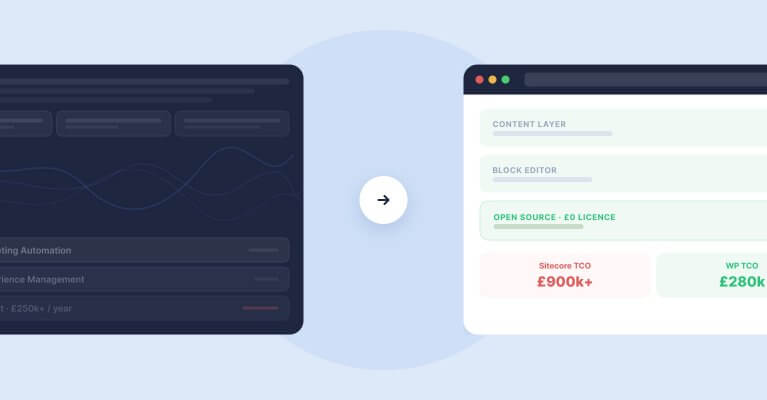
Sitecore to WordPress: What to Expect from the Migration
Your Sitecore contract renewal is approaching and the numbers no longer add up. Before you commit to a migration, here is what actually happens when enterprise teams move from Sitecore to WordPress — the real costs, the content challenges, the SEO risks, and the decisions that separate smooth transitions from expensive false starts.