
If you take a look at any website or application that is regarded as market-leading in this day and age, you’ll find that search is a core foundational element. From social media apps to digital commerce, the ability for users to for what they are looking for is fundamental.
No matter how good your information architecture, user experience design or navigation structure is, at some point, your users will want to enter a search term and see relevant results returned to them. Why then, are there still so many sites and services that relegate search to the status of an add-on feature, with the idea that they’ve ticked a box and that’s as far as they need to go?
At Filter, we know and understand that search is crucial to the success and effectiveness of a website or app. By providing an enterprise-level experience, we can increase search relevancy, provide targeted and personalised responses, and increase conversion rates.
We also understand that many businesses are constrained by their existing technology choices or stacks – hampering their ability to implement change, and reducing their capabilities to offer the service that their customers expect.
Ongoing updates and maintenance is often impacted by lack of resources, and the complexities of managing your own solution, whilst keeping up with new technologies, trends and features.
As part of digital transformation for several clients, we’ve run into this situation time and time again. Thankfully, there is a solution.
We believe that data structures and models have become so complex, and the amount of data so vast, that a basic text or string matching service cannot provide the depth of targeted results that customers now expect and need.
So rather than creating your own internal search engine for your site or app, you should be using a specialist partner to ingest, extract, sort and filter your content whilst you work on increasing your acquisition numbers and having the right services or products for customers to purchase.

Our reommendations for this specialist service are Algolia and Elastic. We’ve worked with the platforms provided by both companies and either can deliver the Search-as-a-Service foundations that you need to develop a genuinely useful and delightful search experience for your users.
Bot services allows you to contextualise and personalise the search experience to help users find what they are looking for as quickly as possible, and offer enterprise-level features at an affordable cost that won’t break the bank, but will lead to increased revenue.
Whether you need the ability to integrate with third parties, custom ranking for search results, or the ability to A/B test what you’re showing to your customers, either option provides full functionality out of the box and the ability to take advantage of AI search capabilities when you want to.
As part of work on client projects in both WordPress and headless solutions, we already have an Algolia and Elastic integration connectors built and ready to go. This means that we can quickly and easily add them to existing and new sites or apps, without needing to reinvent the wheel.

CTO & Founder
Having worked in agencies since he left university, Paul drives both the technical output at Filter, as well as being responsible for planning. His key strengths are quickly understanding client briefs and being able to communicate complex solutions in a clear and simple manner.
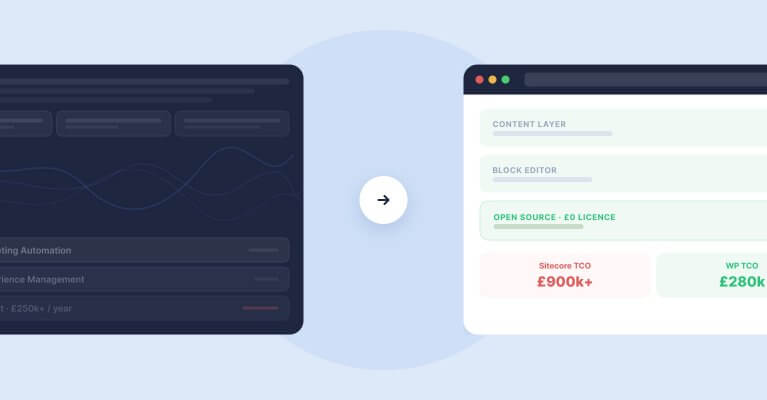
Sitecore to WordPress: What to Expect from the Migration
Your Sitecore contract renewal is approaching and the numbers no longer add up. Before you commit to a migration, here is what actually happens when enterprise teams move from Sitecore to WordPress — the real costs, the content challenges, the SEO risks, and the decisions that separate smooth transitions from expensive false starts.