What Is Agentic Commerce and What Does It Mean for Your Business?
1 May 2026 •
7 mins read
Consider what happens when a customer tells their phone to find a hotel in Edinburgh for a long weekend in June, under £200 a night, with good reviews, and just book it. The AI doesn’t return a list of links. It researches, evaluates, and completes the booking — choosing between options based on the customer’s stated preferences, past stays, and current availability. Agentic commerce is already here, and brands that aren’t visible to AI agents are quietly missing transactions before they even begin.
What Agentic Commerce Actually Means
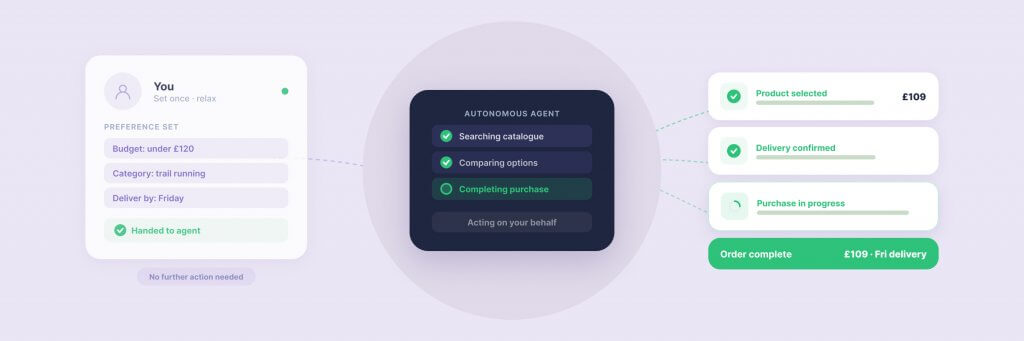
Agentic commerce is e-commerce conducted by AI agents acting autonomously on a customer’s behalf. Unlike a search engine that presents options, or a chatbot that answers questions, an agent makes decisions and executes them — browsing, comparing, selecting, and purchasing without the customer navigating a single website.
The distinction matters. Traditional search put the customer in control of every click. Agentic commerce delegates that process. The customer sets their intent; the agent acts on it — end to end.
What makes this possible is the convergence of three things: large language models that can reason and plan, tool access that lets AI call APIs and interact with external systems, and increasing consumer comfort with delegating decisions to AI. These aren’t future projections — the infrastructure is already live.
Google’s Gemini now lets users shop Walmart’s entire product catalogue through a conversation. Frasers Group has integrated with commercetools to enable purchases through ChatGPT. Jo Malone built an AI Scent Advisor — powered by Google Cloud’s Vertex AI — that replicates an in-store consultation digitally. These aren’t pilots: they’re live customer journeys happening today.
Why the Numbers Matter
McKinsey estimates that agentic commerce could orchestrate up to $1 trillion in US business-to-consumer retail revenue by 2030, with global projections reaching $3 to $5 trillion. These aren’t speculative headline figures — they’re grounded in existing consumer adoption rates accelerating through this decade.
More immediately: AI is expected to account for approximately 1.5% of total US retail e-commerce in 2026 — around $20 billion in spending, nearly four times the 2025 figure. During the 2025 holiday season, AI-driven recommendations and personalised experiences were credited with 20% of all retail sales and $262 billion in revenue.
Consumer intent surveys point in the same direction. More than half of consumers now expect to use AI assistants for shopping within the next 12 months. Among global retailers, 63% say businesses without AI agent capability will fall behind competitors within two years. The window to prepare is not a long one.
How Discovery Changes First
The most immediate impact for most businesses isn’t at checkout — it’s at the very top of the funnel.
Traditional e-commerce was built on a legible, predictable model: keyword search → product page → buy. Every step was measurable, attributable, and optimisable. SEO, PPC, comparison sites, affiliate traffic — all of it assumed a human doing the clicking, making the choice, navigating the journey.
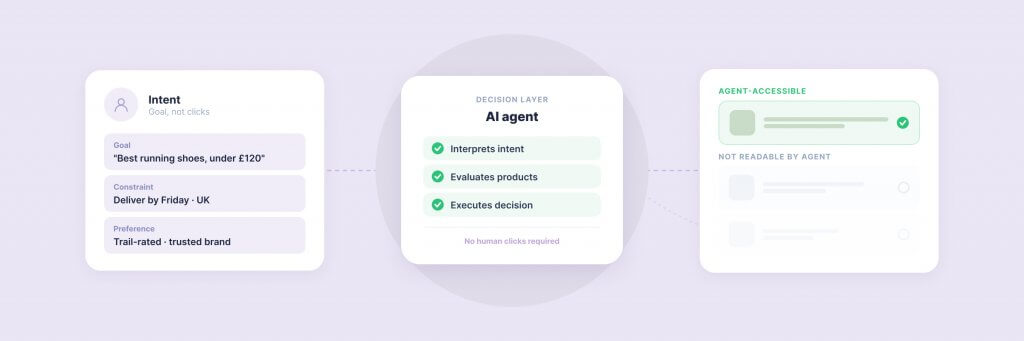
Agentic commerce inserts a decision layer between the customer and the brand. The agent queries AI systems rather than search engines. It evaluates structured data, reviews, pricing signals, and API-accessible product information. If your product or service isn’t accessible to the agent — because your site blocks crawlers, your data isn’t structured, or your inventory isn’t queryable — you’re simply not in the running. The transaction happens without you.
This is the core challenge that sits at the heart of AI visibility. Ranking well in Google doesn’t automatically translate to being selected by an AI agent. The signals are different; the criteria are different. Brands that built their digital presence around click-based traffic need to understand what “visibility” means when the customer may never actually land on their website at all.
Agentic commerce doesn’t affect all sectors equally — but it affects all of them, and the implications shift considerably depending on where your business sits.
Retail and E-commerce
If a customer’s agent is shopping for a specific product and three competitors have structured, queryable product data while you don’t, the agent will never reach your listing. Pricing, availability, specifications, and review data need to be machine-readable — not just human-readable. For retail brands, this is the most direct and immediate impact.
Hospitality and Travel
Bookings are complex decisions — exactly the kind people are most inclined to delegate. A customer who’d previously spend 20 minutes comparing hotels on a booking site is the same customer who will tell an AI to “find me somewhere in Edinburgh, under £200, good reviews” and trust the result. Being well-represented in AI responses — accurate descriptions, recent reviews indexed, clear pricing structures — matters more here than in almost any other sector. We’ve written specifically about how WordPress sites can prepare for AI search, which is directly relevant to hospitality brands on the platform.
Professional Services and B2B
Less obvious, but increasingly important. As procurement agents emerge, vendor shortlisting is beginning to happen in AI systems before a human even picks up the phone. Brands that are well-documented, well-reviewed, and clearly structured in their online presence will be surfaced first. If your professional services firm doesn’t exist clearly in AI knowledge bases, it won’t appear in the shortlist.
What Your Brand Needs to Get Right
Being agentic-commerce-ready doesn’t require a wholesale re-platform. It does require a shift in how you think about your digital presence — and in some cases, a rethink of where your investment goes.
Structured data matters more than it ever has. Search engines reward it; AI agents depend on it. Product schema, pricing markup, review structured data, and FAQs that can be extracted and evaluated are the connective tissue between your site and the agent’s decision process. If you haven’t audited your schema implementation recently, now is the time.
Content needs to be findable and attributable. AI systems select sources they trust. A brand with a clear point of view, consistent published expertise, and strong entity signals — your name confidently associated with specific topics across multiple authoritative sources — is far more likely to be included in an agent’s recommendations than one that doesn’t exist in AI knowledge bases.
When an agent refers a customer to your website, that site needs to perform. Not all agentic commerce completes entirely off-site. When an agent does send a customer through, that person expects a fast, clear, easy-to-complete experience. The standards for the on-site journey don’t drop because the referral came via AI. Personalisation tools like PersonalizeWP help ensure that traffic — however it arrives — lands in a relevant, optimised experience.
Pricing and availability need to be real-time and accurate. Agents evaluate and act on data. If your pricing is stale, your availability inaccurate, or your checkout flow unreliable, the agent either won’t select you — or the transaction will fail. Neither outcome is acceptable.
The WordPress and WooCommerce Angle
For brands on WordPress — particularly those using WooCommerce — the practical implications translate directly to the platform you’re already on. WordPress’s open architecture, extensive API surface, and plugin ecosystem make it well-suited to the kind of structured, accessible content that agentic systems depend on.
We’ve written specifically about why WooCommerce is your gateway to AI-powered shopping — covering how the platform’s native capabilities position merchants for this shift. If you’re running a WooCommerce store, that’s worth reading alongside this piece for the platform-specific detail.
More broadly, the technical work of preparing your WordPress site for AI visibility — schema, structured content, technical accessibility to crawlers and AI systems — is directly aligned with agentic commerce readiness. The groundwork is largely the same, and it’s groundwork that benefits your position in both traditional search and emerging AI channels simultaneously.
The Definitive Guide to Generative Engine Optimisation
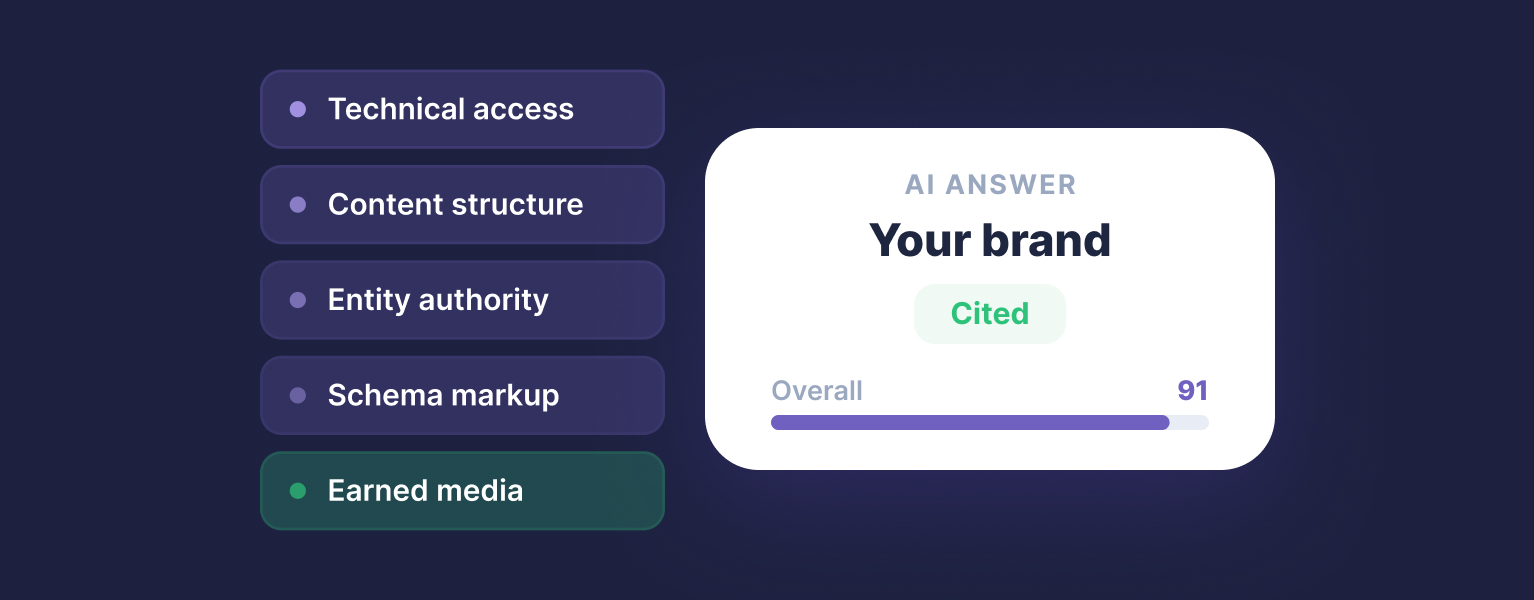
AI shopping assistant visibility builds on the same foundations as broader AI search visibility. Our GEO guide covers the full picture — from technical access and structured data to entity authority and how to measure your results.
How Filter Approaches Agentic Commerce Readiness
We’ve been thinking about how brands stay visible when discovery changes — before “agentic commerce” became a widely used term. Our work on personalisation through PersonalizeWP, on AI visibility through our LLM AI Optimisation Audit, and on generative engine optimisation as a discipline all point toward the same underlying question: how does a brand remain discoverable and trusted when the rules of discovery are changing?
The answer is clear, even if the implementation isn’t: be technically accessible, have a consistent and authoritative presence in AI knowledge systems, and ensure that when a customer does arrive — however they arrive — the experience is fast, relevant, and complete.
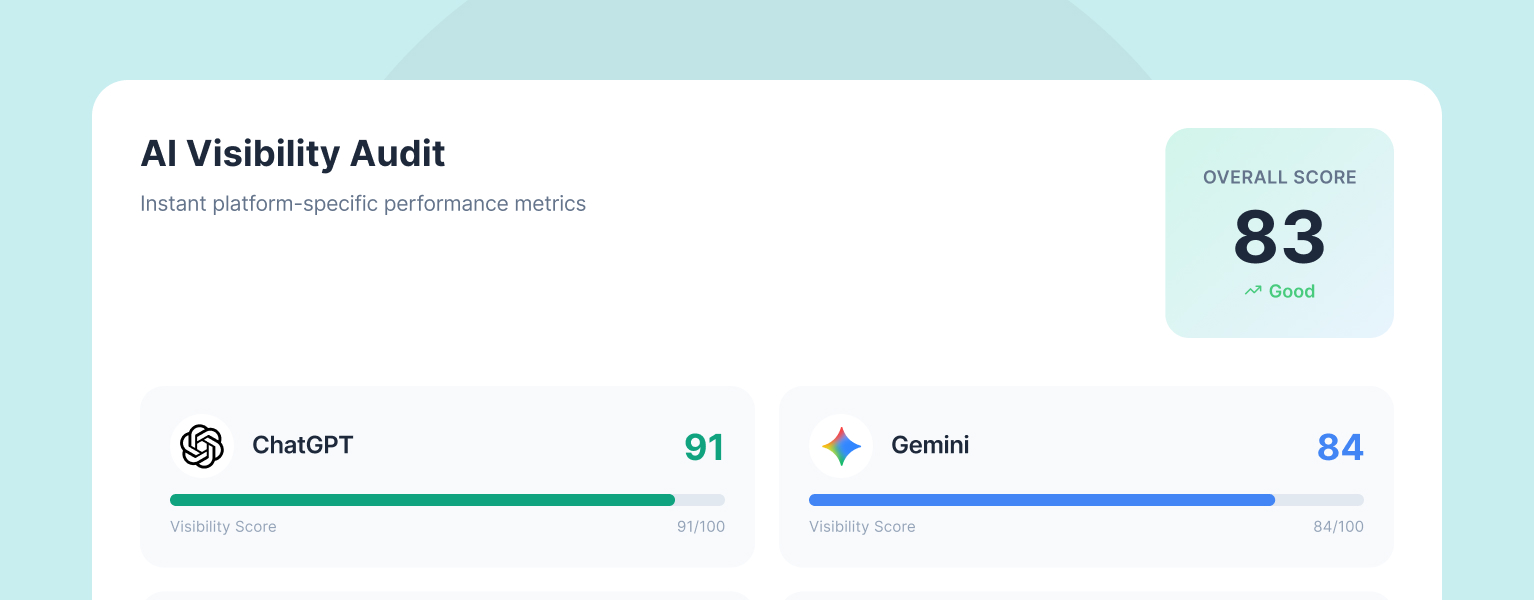
If you want to understand where your brand currently stands, our free LLM AI Optimisation Audit runs your site against the AI platforms that matter and shows you exactly what’s visible, what isn’t, and what to prioritise. Get in touch to run yours.
Having worked in agencies since he left university, Paul drives both the technical output at Filter, as well as being responsible for planning. His key strengths are quickly understanding client briefs and being able to communicate complex solutions in a clear and simple manner.
Our guide shows digital leaders and development teams how structured data earns AI citations now that systems like ChatGPT and AI Overviews, not rich results, decide visibility.
Download our practical guide to AI and WordPress, covering the new Abilities API, MCP Adapter and AI Client in core, plus how to prepare your platform for the agentic web.
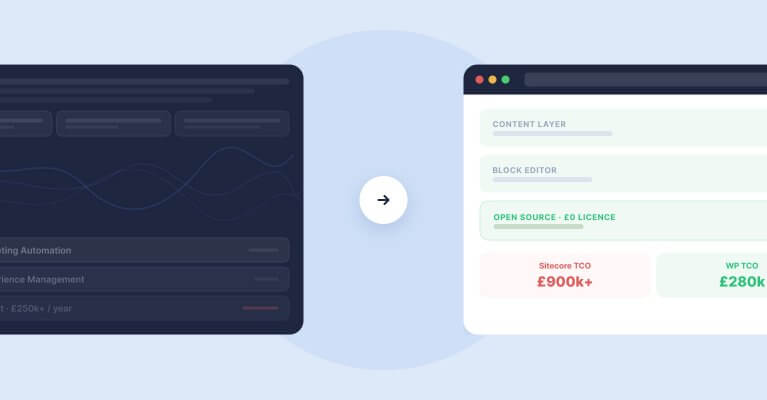
Sitecore to WordPress: What to Expect from the Migration
Your Sitecore contract renewal is approaching and the numbers no longer add up. Before you commit to a migration, here is what actually happens when enterprise teams move from Sitecore to WordPress — the real costs, the content challenges, the SEO risks, and the decisions that separate smooth transitions from expensive false starts.