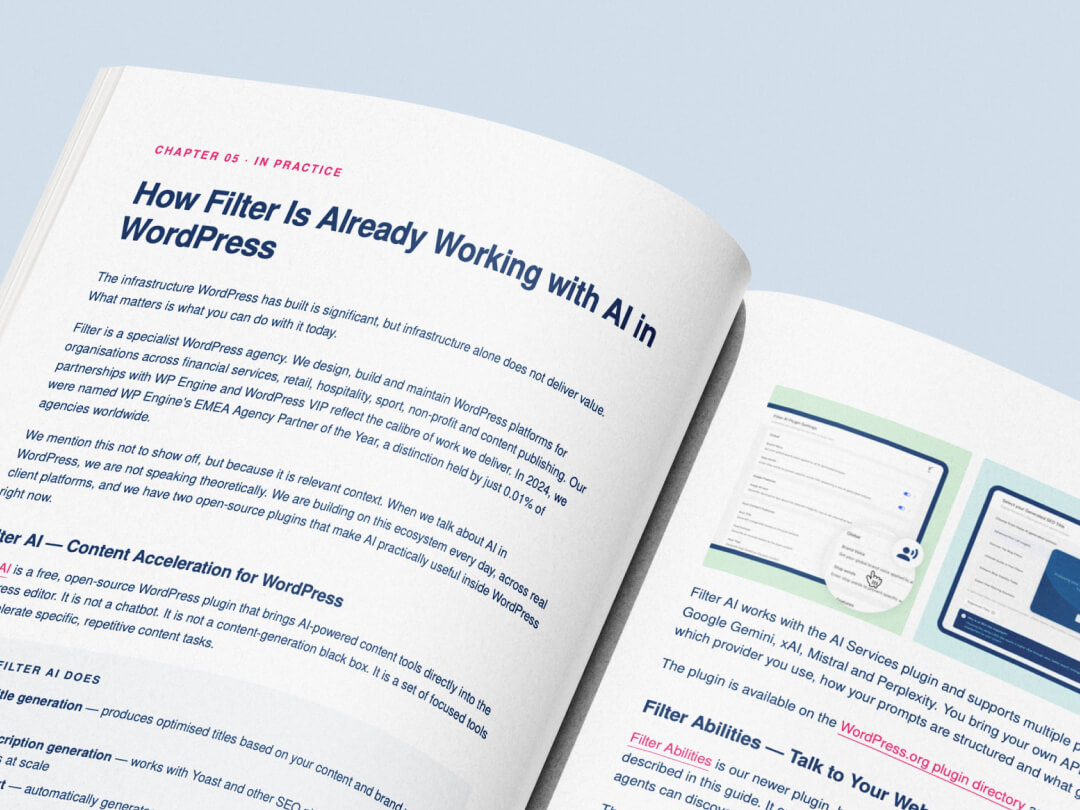
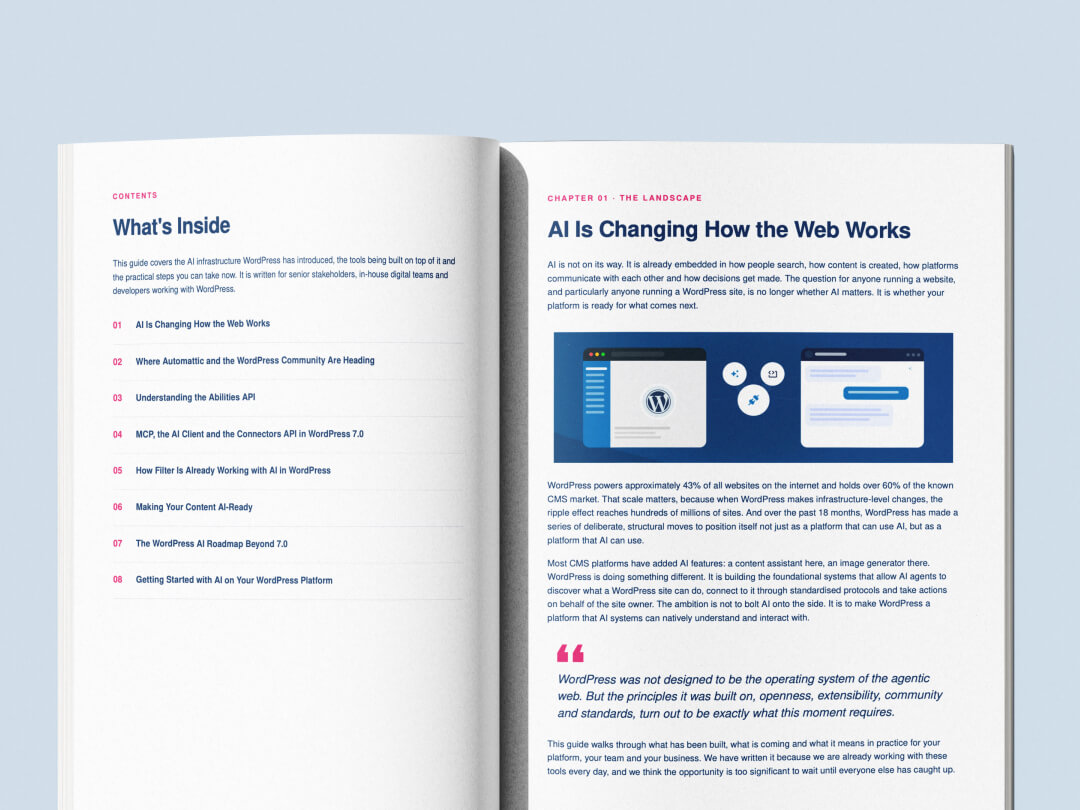
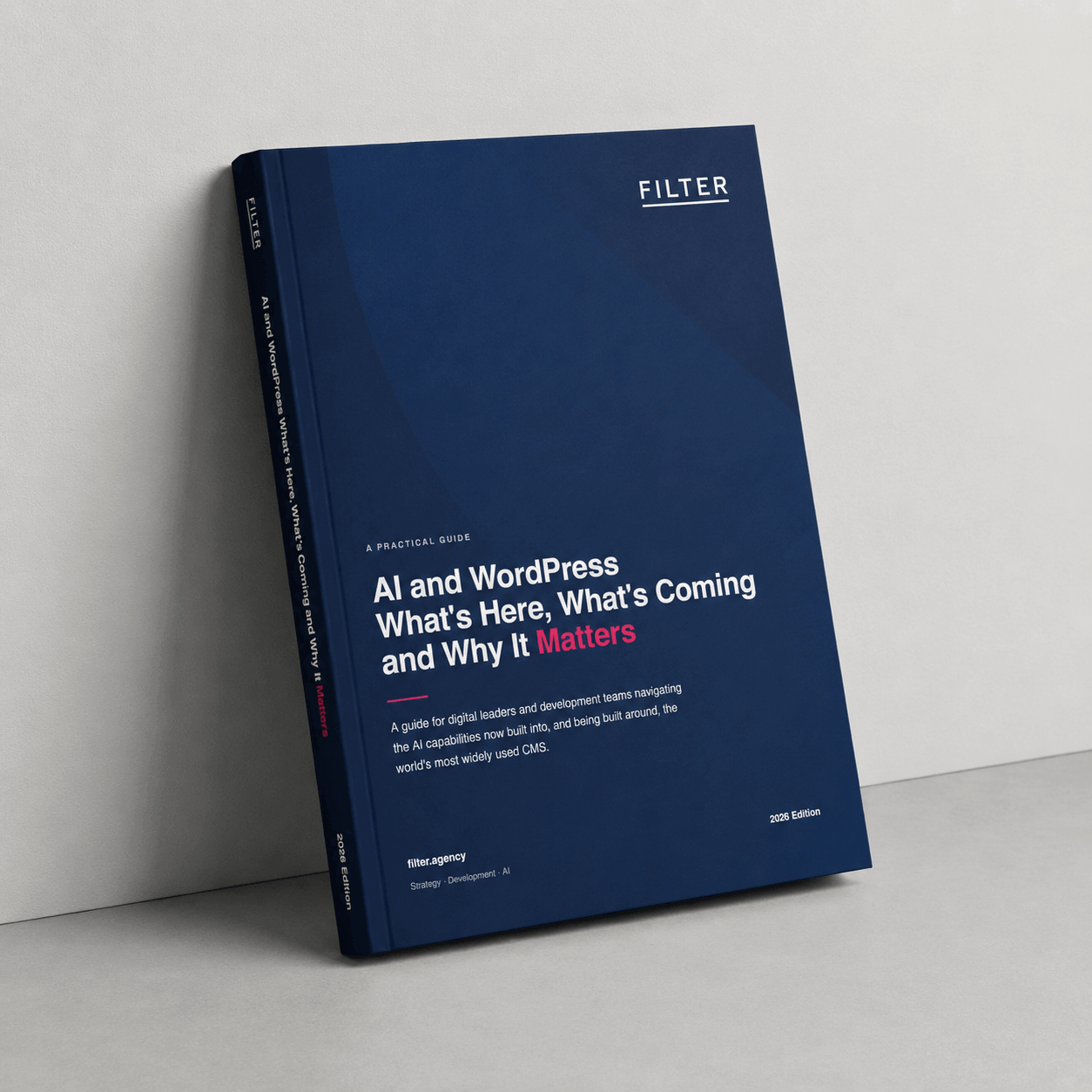
A guide for digital leaders and development teams navigating the AI capabilities now built into, and being built around, the world’s most widely used CMS.
"*" indicates required fields
WordPress was not designed to be the operating system of the agentic web. But the principles it was built on, openness, extensibility, community and standards, turns out to be exactly what this moment requires.

Paul Halfpenny
CTO, Filter
WordPress now powers around 43% of the web, and over the past 18 months it has been quietly re-engineered to work with AI agents, not just AI features.
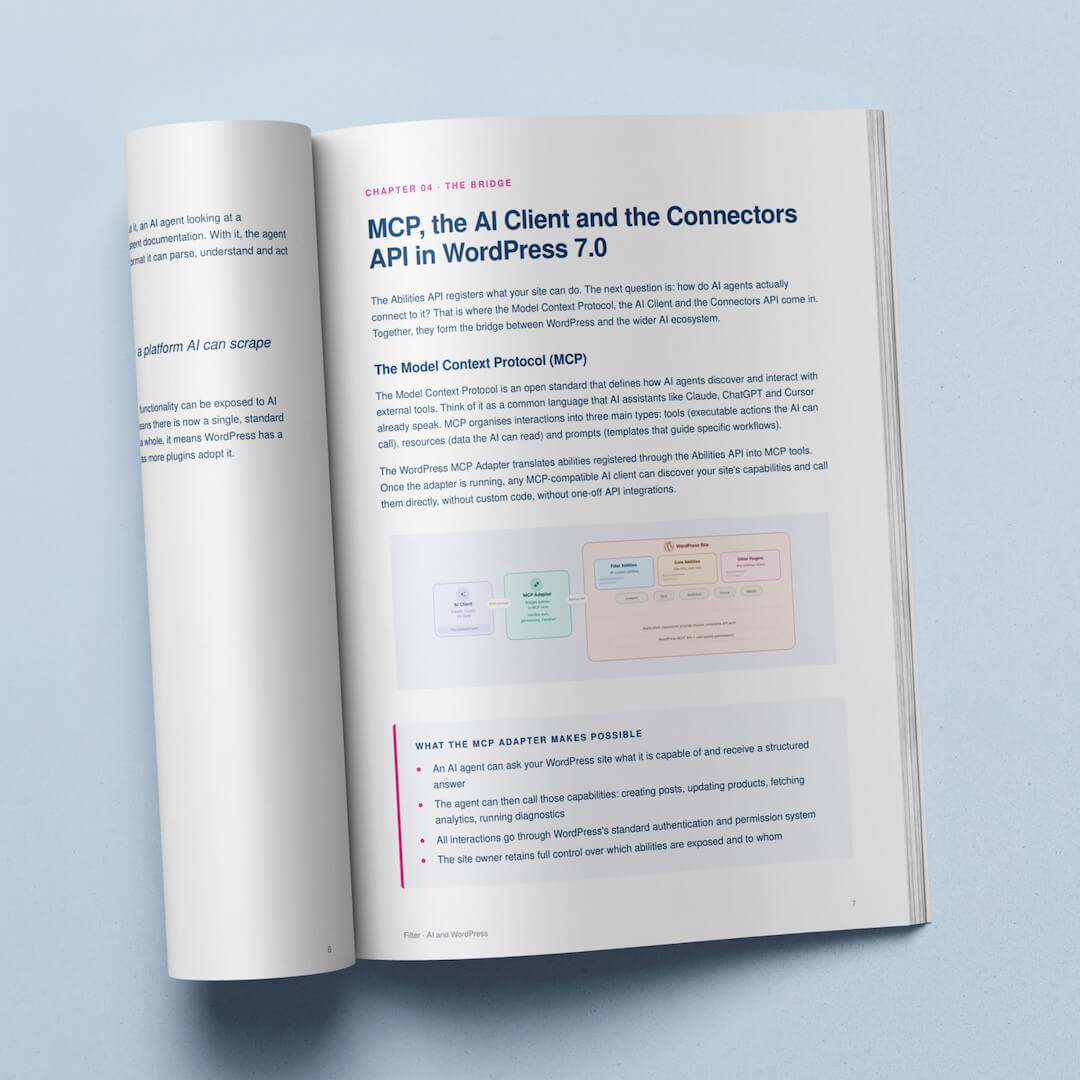
The Abilities API, MCP Adapter, AI Client and Connectors API are all in core as of WordPress 7.0.
Most teams have not caught up yet. This guide is for the ones who want to.
Written by the team at Filter, it covers what has been built, what is coming, and what it means in practice for your platform.
AI is already shaping how people search, how content is created, and how platforms talk to each other. For WordPress sites, that has two consequences.
The first is infrastructure. AI agents can now discover what your site can do and call those capabilities directly, without custom integrations. The second is visibility. ChatGPT, Gemini, Claude and Perplexity decide what to cite based on signals that are different from traditional SEO, and most sites are not optimised for either.
The guide covers both sides. It explains the new APIs in plain terms, shows how Filter is already using them on client platforms, and sets out the practical steps for getting your site ready.
Eight chapters covering the WordPress AI landscape, the Abilities API, the MCP Adapter and AI Client in WordPress 7.0, how to make your content AI-ready, the roadmap beyond 7.0, and a practical starting point for your platform.
It also covers our own work in this space, including Filter AI and Filter Abilities, our two open-source plugins that bring AI tooling directly into the WordPress editor and let you talk to your site through Claude.