An AI readiness assessment helps you understand whether your organisation has the data, infrastructure, skills, and strategy to adopt AI effectively — before you commit budget to tools you may not be ready to use.
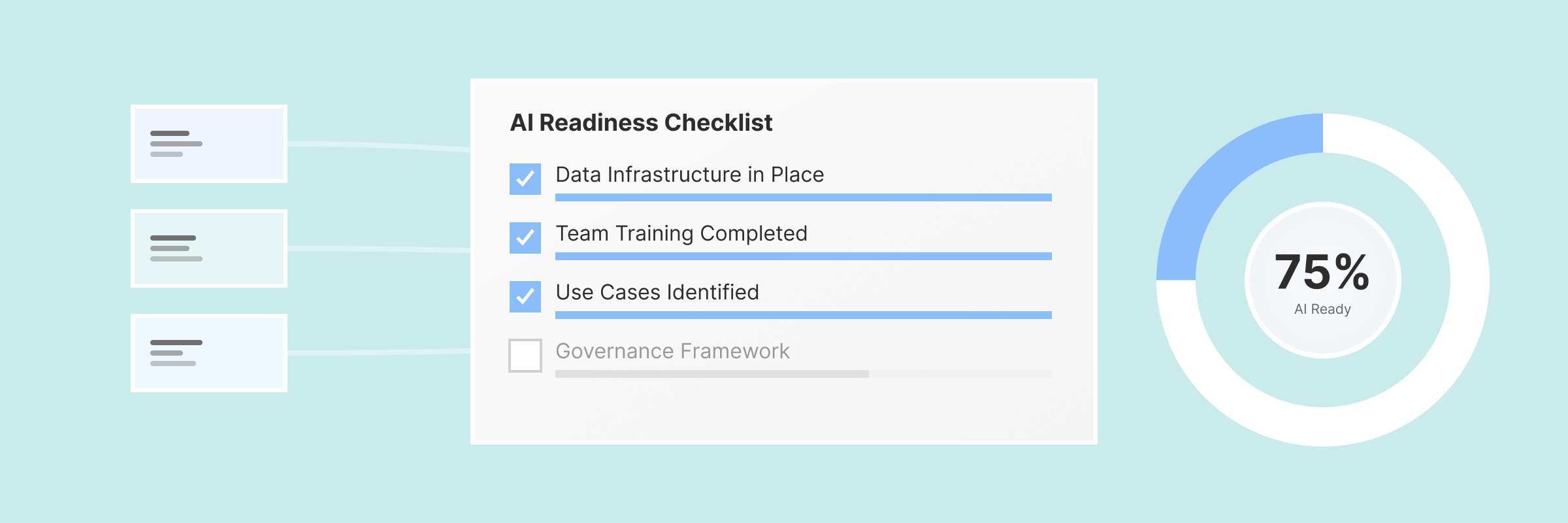
An AI readiness assessment helps you understand whether your organisation has the data, infrastructure, skills, and strategy to adopt AI effectively — before you commit budget to tools you may not be ready to use.
Everyone is talking about AI. Your competitors are probably talking about it too. But there is a big difference between wanting to use AI and being genuinely ready to get value from it.
We see it all the time. A business invests in an AI chatbot, a content generation tool, or a personalisation engine — and three months later it is gathering dust because the data was not there, the team did not trust it, or nobody was quite sure what problem it was solving.
An AI readiness assessment is the step most organisations skip. It is a structured way of asking: do we have the data, the infrastructure, the skills, and the strategic clarity to make AI work for us — not just as a demo, but in production, at scale, delivering measurable results?
At Filter, we have been building WordPress platforms for over two decades. Increasingly, that means helping clients figure out where AI genuinely fits — and where it doesn’t. We build the tools (PersonalizeWP, Filter AI), run the audits, and connect the platforms. So we have a practical view of what readiness actually looks like.
The temptation is to jump straight in. A recommendation engine for your WooCommerce store. An automated content pipeline. A chatbot for customer support. The use cases sound compelling — and they are, when the foundations are right.
When they are not, here is what tends to happen.
A retailer rolls out personalised product recommendations, but their customer data is spread across five systems with no integration layer. The recommendations are irrelevant because the data behind them is incomplete. A publishing company invests in AI content tools, but their editorial team has no guidelines for reviewing AI outputs, so quality drops and trust erodes. A services business builds an AI search feature, but their content is poorly structured and lacks the schema markup that search tools depend on.
These are not technology failures. They are readiness failures. And they are avoidable.
An AI readiness assessment helps you identify these gaps before you commit budget. It is not about slowing down — it is about making sure the first thing you build actually works.
A good assessment looks at five interconnected areas. Each one matters, and weakness in any of them can undermine the rest:
Here is what each involves in practice.
AI is only as good as the data it works with. This is where we start with every client engagement, and it is where most gaps are found.
The questions that matter: is your customer data accurate, consistent, and up to date? Is it centralised, or scattered across your CMS, CRM, email platform, and analytics? Can it be accessed programmatically through APIs, or is it locked in spreadsheets and siloed tools?
If your data lives in five different places with no unified view, that is the first problem to solve. For WordPress-based platforms, this is where tools like a customer data platform become essential — they pull data from multiple touchpoints into a single profile your AI tools can actually use. We work with CDPs like Bloomreach alongside CRMs like HubSpot as part of our data and analytics services, helping clients centralise and activate their customer data.
GDPR compliance matters here too. We implement consent management and privacy-first tracking to make sure your data strategy is not just effective but compliant.
Can your current platform actually support the AI features you want? This is not a theoretical question — it has practical, technical answers.
Your CMS needs to support API access so AI tools can read and write content. Your hosting needs to handle the additional compute and API calls. Your architecture needs to be composable enough to add new services without rebuilding everything.
WordPress has matured significantly here.
The REST API and WPGraphQL make it straightforward to connect external AI services to your content layer. We recently built a direct connection between WordPress and AI assistants using the Abilities API and MCP — so AI tools can manage content, audit SEO, and analyse visitor data directly within the CMS.
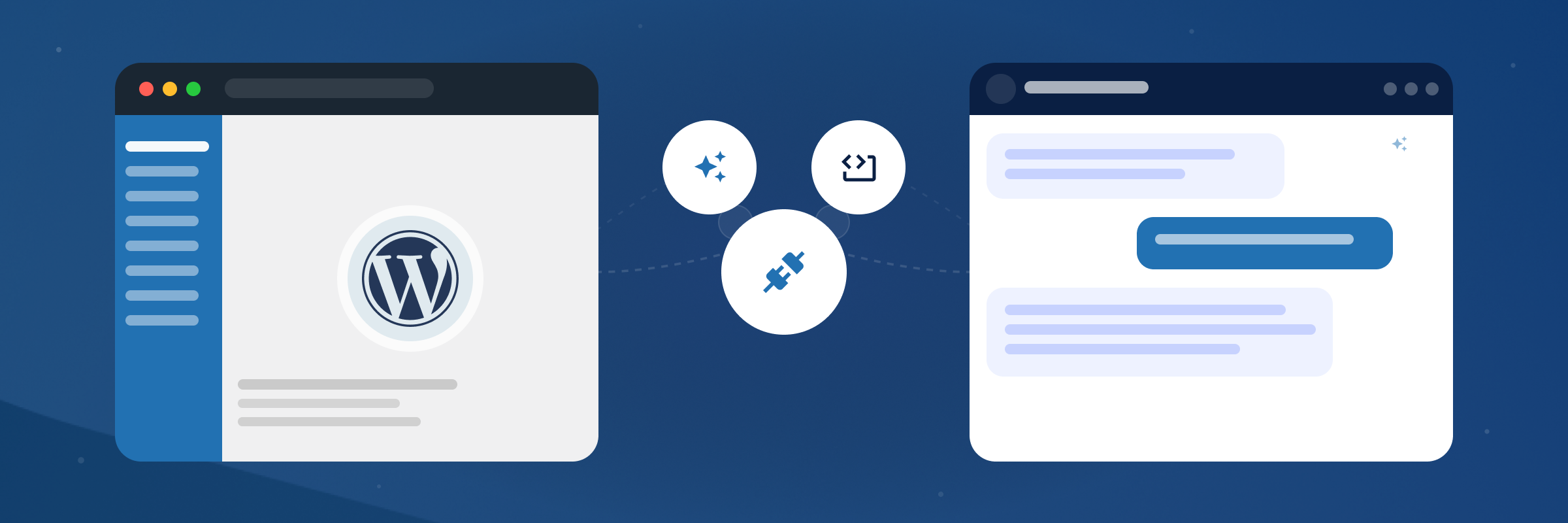
How We Connected WordPress to AI Using the Abilities API and MCP.
In our experience, the highest-value use cases for mid-market and enterprise organisations tend to fall into four areas.
The first is personalisation — tailoring on-site experiences based on visitor behaviour, location, and data signals. We built PersonalizeWP specifically for this. It is an award-winning WordPress personalisation plugin that enables dynamic content without complex integrations. For JD Wetherspoon, we delivered automated, day-based menu personalisation across their digital platform. For Medivet, we used VWO for A/B testing and experimentation to boost conversions.
The second is content operations — using AI to draft, optimise, and enhance content while maintaining editorial quality. Filter AI is our open-source WordPress plugin that automates tasks like SEO metadata creation, alt-tag generation, and content recommendations, saving content teams real time without sacrificing brand voice.
Then there is search and discovery. We integrate tools like Algolia, Elastic, and WP Engine Smart Search to deliver predictive search, contextual results, and auto-suggestions that go well beyond keyword matching — helping visitors find what they need faster and more intuitively.
And finally, analytics and insight. Using GA4, Hotjar, Microsoft Clarity, and custom Looker Studio dashboards, we help clients understand user behaviour, identify friction points, and refine customer journeys based on evidence rather than guesswork.
This is where most organisations underestimate the challenge. The technology is rarely the hard part. Getting your team ready is.
Does your team know how to brief, evaluate, and quality-check AI outputs? They do not need to be data scientists, but they do need digital literacy and critical thinking. Are your stakeholders aligned on what AI can and cannot do? Are they prepared for the iterative process of getting it right — where the first version is almost never the final version?
We have seen AI projects stall not because the technology failed, but because the content team did not trust the outputs, or the leadership expected instant transformation, or nobody owned the initiative. Cultural readiness is not a soft issue — it is the difference between a successful pilot and an expensive dead end.
AI introduces questions that most organisations have not had to answer before. How do you ensure AI-generated content is accurate? How do you handle bias in recommendations? Can you explain to a customer why they were shown a particular offer?
The EU AI Act, GDPR, and sector-specific regulations all have implications for how you deploy AI. A readiness assessment should flag governance gaps early — before they become reputational or legal risks.
If you are using AI to generate content, you need editorial guidelines. If you are using AI for personalisation, you need transparent data practices. If you are using AI to make decisions that affect customers, you need accountability structures. These are not optional extras — they are part of doing it properly.
Across the clients we have worked with, the same barriers come up again and again.
The most common is fragmented data. Customer information lives in the CRM, behavioural data lives in analytics, transactional data lives in the e-commerce platform, and none of them talk to each other. AI needs connected data to deliver meaningful results — without it, you are building on sand.
Legacy platforms are a close second. Older CMS and DXP systems that were not built with APIs or extensibility in mind simply cannot integrate with modern AI services. This is one of the strongest arguments for enterprise WordPress — it is open, extensible, and has an ecosystem of tools built for exactly this kind of integration.
Then there is the ownership problem. AI projects that sit between marketing, IT, and operations often drift. Someone needs to be accountable for the programme, with the authority to make decisions and the budget to act on them.
And finally, unrealistic timelines. Teams that expect AI to deliver transformative results in weeks are setting themselves up for disappointment. AI is iterative by nature — the first version teaches you what the second version should be.
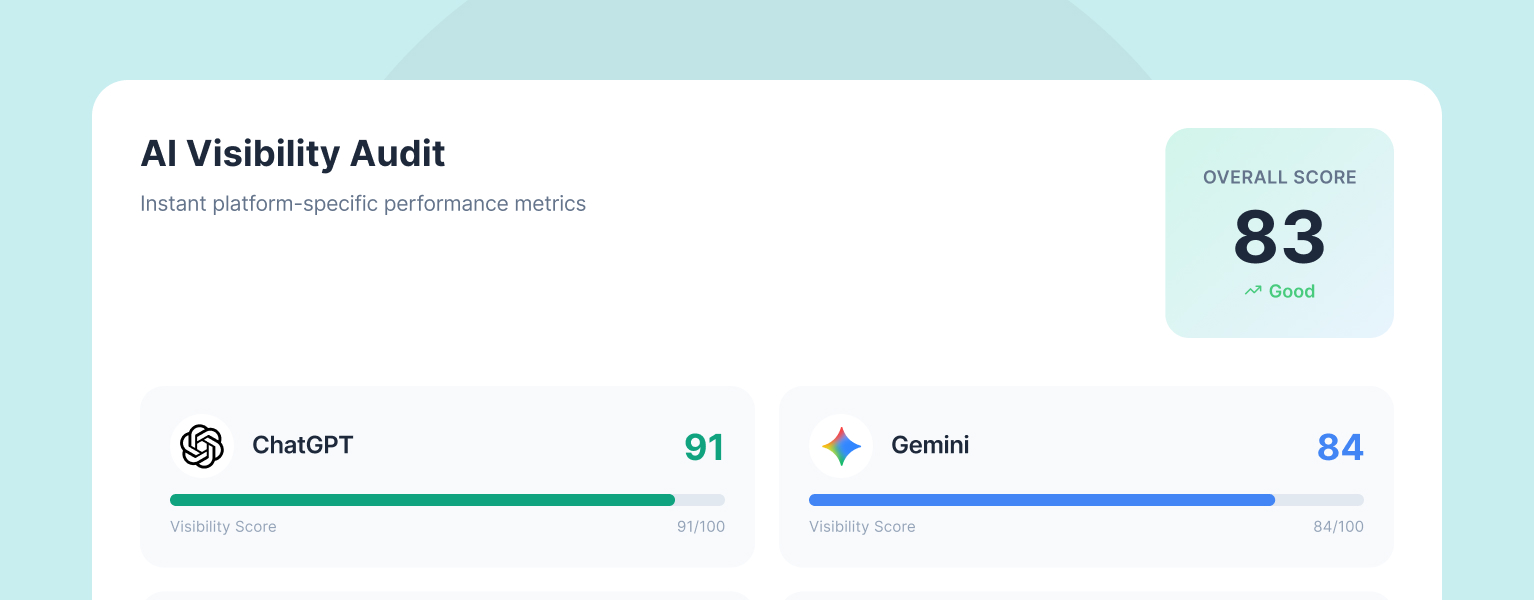
See how your website performs across ChatGPT, Gemini, Claude, Perplexity, and AI Overviews. Free, instant, and based on 90+ ranking factors.
Start by defining what you are actually trying to achieve. Be specific. “Increase organic traffic by improving content relevance” is actionable. “Use AI for marketing” is not. Tie every objective to a measurable target so you know when you have succeeded.
Next, map your data. List every source — CRM, analytics, CMS, email platform, e-commerce — and for each one, note its quality, accessibility, and integration status. The gaps will become obvious quickly. Then look at your platform. Can your CMS serve personalised content? Does it expose APIs? Is your architecture flexible enough to add new services without rebuilding everything? If you are not sure, our digital strategy and planning team can help you evaluate.
Talk to your team too. Find out who is already experimenting with AI tools, who is curious, and who is sceptical. The people closest to the work often have the clearest view of where AI could — and could not — help.
Check whether you have governance in place for AI-generated content, automated decisions, and data usage. If not, draft those policies before you start building. And finally, score each area honestly — data, technology, use cases, people, governance — on a simple scale: nascent, developing, established, or advanced. Start building where you score highest, and invest in fixing where you score lowest.
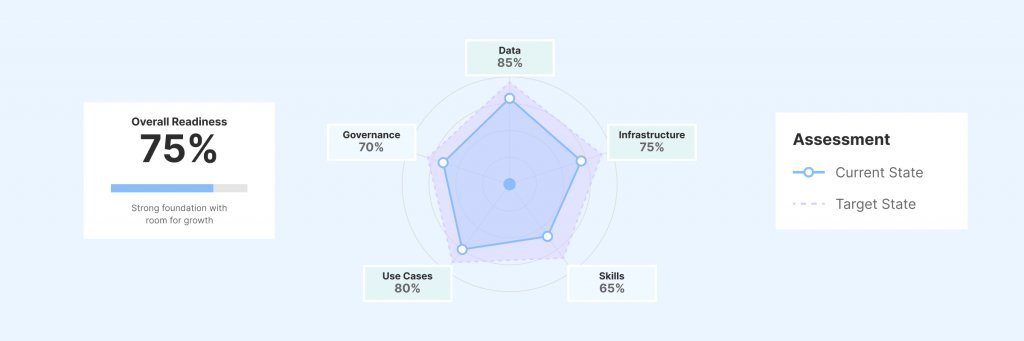
We approach AI readiness from a practical angle.
The simplest place to start is our LLM AI Optimisation Audit. It evaluates how well your website is structured for visibility across ChatGPT, Gemini, Claude, Perplexity, AI Overviews, and Bing Copilot — scanning over 90 ranking factors across structured data, semantic HTML, content quality, E-E-A-T signals, and citation readiness. You get an overall score plus individual platform scores, with a prioritised action plan. It is free, it takes seconds, and it gives you a concrete starting point.
For a deeper evaluation, we work with your team through our digital strategy and planning services to assess data readiness, platform architecture, and use case alignment. That includes in-depth website audits covering technical health, SEO, accessibility, and conversion funnels — followed by a phased roadmap that connects your AI ambitions to your actual infrastructure.
And when you are ready to build, we connect the pieces. That might mean implementing PersonalizeWP for dynamic content personalisation, deploying Filter AI to automate your content workflow, integrating Algolia or WP Engine Smart Search for intelligent site search, or setting up GA4 with custom dashboards and CDP integration through our data and analytics services.
We have been building scalable WordPress platforms for over 20 years. We are a WP Engine EMEA Agency Partner of the Year and WordPress VIP Silver Partner. We are not an AI company — we are a WordPress agency that understands how AI fits within a broader digital platform, and how to make it work in practice.
Get in touch and we will help you work out what is realistic, what is valuable, and what to do first.

CTO & Founder
Having worked in agencies since he left university, Paul drives both the technical output at Filter, as well as being responsible for planning. His key strengths are quickly understanding client briefs and being able to communicate complex solutions in a clear and simple manner.
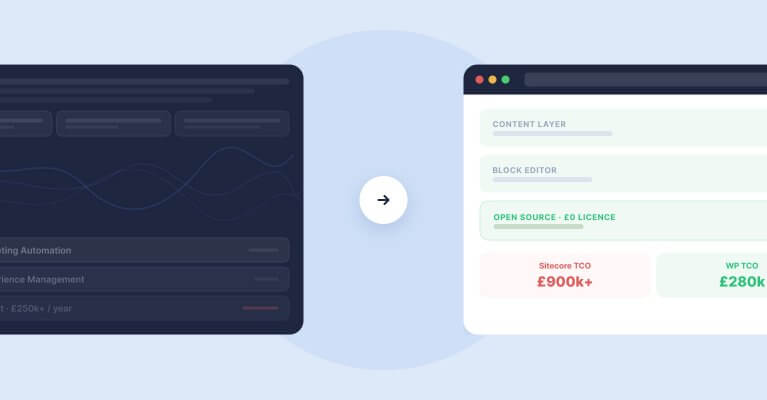
Sitecore to WordPress: What to Expect from the Migration
Your Sitecore contract renewal is approaching and the numbers no longer add up. Before you commit to a migration, here is what actually happens when enterprise teams move from Sitecore to WordPress — the real costs, the content challenges, the SEO risks, and the decisions that separate smooth transitions from expensive false starts.