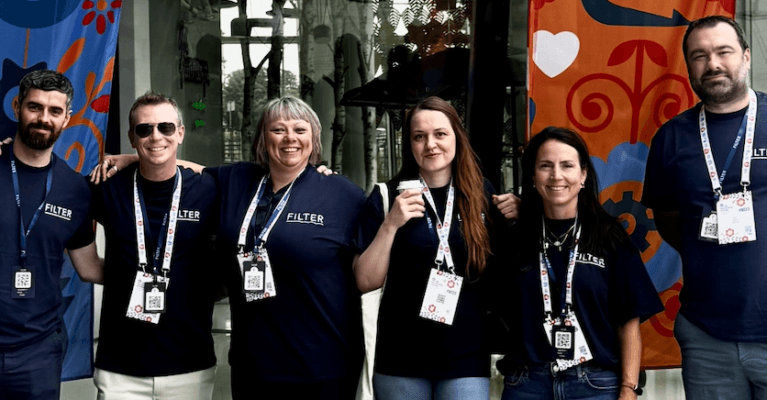
We spent today at WP Engine’s Decode 2026 conference – an event that, frankly, felt less like a day of sessions and more like a mirror held up to where the agency world actually is with AI right now.
Three sessions stood out, and the conversations they sparked are still rattling around. Here’s what we heard, what it confirmed, and where we think it leads.
The stat that opened proceedings set the tone: 73% of agency professionals now view AI optimisation as a shift on the scale of mobile-responsive design. Cast your mind back to 2009 or 2010. Desktop and mobile were separate builds. That sounds absurd today, and within a few years, the idea of building only for human users will probably sound just as absurd.
The new user isn’t always a person on a phone. Increasingly, it’s an AI agent making decisions on someone’s behalf. That changes almost everything about how we think about websites – not just what they look like, but how their content is structured, what data they surface, and how they communicate authority to systems that never actually read a page the way a human does.
Research covering more than 200,000 digital agencies worldwide backs this up with some stark numbers. AI leaders, the agencies that have leaned in, are delivering 3x better user engagement metrics and 4x more operational efficiencies for their clients compared to those still sitting on the fence. That gap is only going to widen.
One of the most practically useful sessions of the day tackled the question of how you actually build for both human visitors and AI agents simultaneously, without sacrificing either.
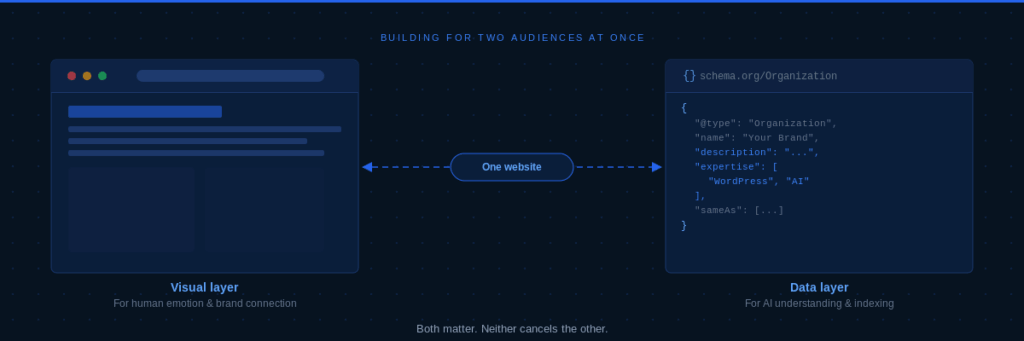
The framing we found most helpful: think of a website as having a visual layer and a data layer. The visual layer is for human emotion, decision-making, and brand connection. The data layer is what determines whether an AI can correctly understand, index, and cite your client’s brand. Both matter. Neither cancels out the other.
What does this mean in practice? Schema markup needs to be genuinely optimised for LLM readability, not just ticked off a checklist. Content architecture needs to be clean and indexable. FAQs – strategically placed and properly structured – are increasingly important. And all of this needs to start with structure, with design layered on top.
The accessibility analogy came up more than once: when the industry started building properly for screen readers, it didn’t strip websites of their character. It made them better websites. The same logic applies here.
For us at Filter, this isn’t a new conversation. We’ve been building structured, semantically rich WordPress sites for years, and our Filter AI plugin and free LLM audit exist precisely because we recognised this shift early. But the sessions today reinforced how much further there is to go – and how much of an opportunity exists for agencies willing to bring genuine diagnostic depth to this work rather than just wrapping it in a shiny audit template.
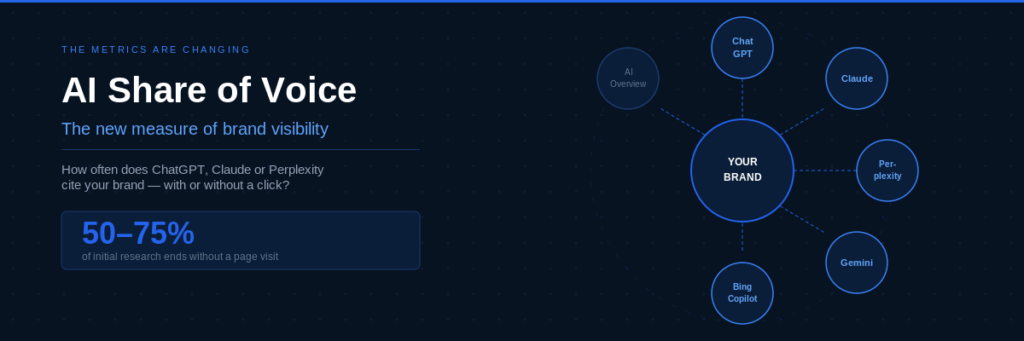
Zero-click searches now account for somewhere between 50% and 75% of initial research in some sectors. That’s a significant portion of your clients’ potential audience reaching a conclusion – or being pointed to a competitor, without ever visiting a page.
The hero metric of “Google rank” is giving way to something different: AI share of voice. How often is your client’s brand being cited by ChatGPT, Claude, Perplexity, or Gemini? When an AI names a brand without a click, does your client’s brand feature?
This is genuinely new territory. There isn’t a clean playbook yet. But the agencies winning right now are the ones approaching clients with this question proactively – not waiting to be asked, and coming with data, not just talking points. Showing a CMO how their brand appears (or doesn’t) across the major AI platforms is a conversation starter that cuts through fast.
The agencies getting this right are building roadmaps, not handing over scores and saying good luck. That distinction matters.
Perhaps the most interesting thread running through all three sessions was this: as AI handles more of the execution layer, the premium on human judgement, trust and relationships goes up, not down.
Two years of flat or negative hiring at entry and junior levels across the industry reflect what AI efficiency gains have already done to the economics of production work. The future agency, leaner, more senior-heavy, more specialised, isn’t a dystopia. It’s a sharper version of what good agencies have always aspired to be.
But that sharpness requires something AI can’t shortcut: genuine expertise in a defined domain, the confidence to be opinionated about what clients should do (not just how to do it), and the trust that comes from showing up consistently and knowing your client’s business deeply.
The stat that stuck: AI leaders are four times more likely to always initiate AI conversations with clients, rather than waiting to be asked. Being a reliable, informed voice during a period of rapid change is itself a form of value delivery. Clients remember who helped them navigate uncertainty.
At Filter, this resonates. We’ve been using Claude as part of our own project management workflows for a while now, and our dev team has embedded AI tooling into how we build. It hasn’t replaced thinking; it’s freed up more time for it. The sessions today reinforced that this is the direction of travel for the whole industry.
A few things we’ll be thinking about off the back of today:
AI readiness audits should be genuinely diagnostic. The best ones surface specific findings, test how LLMs represent a brand in real-time, and lead directly to an actionable roadmap. Anything that doesn’t do that risks being more sales theatre than substance.
The question to ask every current client: “Where do you think your brand is being found in AI search?” It’s not a pitch. It’s the right question to be asking right now and most clients haven’t been asked it yet.
WordPress is already signalling the direction: The Abilities API in WordPress 6.9 and the expanded AI connectivity coming in 7.0 mean the platform itself is moving toward AI agent readiness. Agencies that know how to execute on this have a real head start.
Specialisation is the competitive moat: The data is unambiguous: agencies with deep, narrow expertise outperform generalists. AI accelerates this – not because it replaces expertise, but because it commoditises the execution that used to differentiate generalists.
If any of this resonates and you’re wondering what it means for your brand’s presence in AI-driven search, our free LLM audit is a good place to start. Or just get in touch – we’re happy to talk through what we’re seeing.

Senior Project Manager
Allie ensures projects run smoothly from development through to launch, coordinating teams, managing timelines, while maintaining a strong focus on quality. With a collaborative, supportive approach, she guides clients through the final stages to deliver a seamless, successful launch.
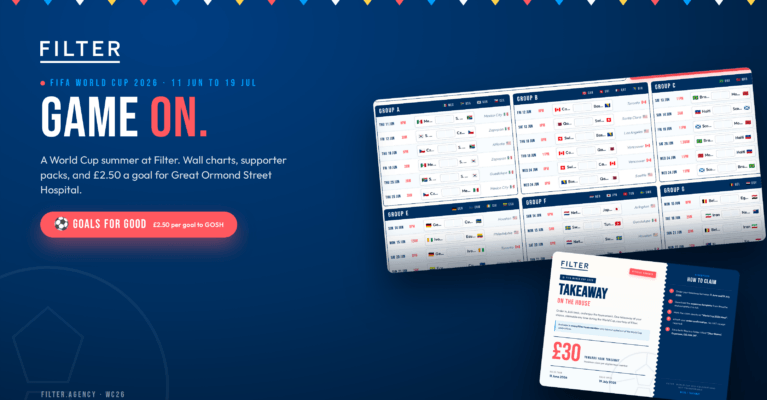
Game On: A World Cup Summer At Filter
Not everyone at Filter follows football. But everyone likes feeling part of something. Here is how we are marking the 2026 World Cup as a team, and the wall chart we built to bring it all together. FIFA World Cup 2026 The 2026 FIFA World Cup kicks off on 11 June and runs through to...