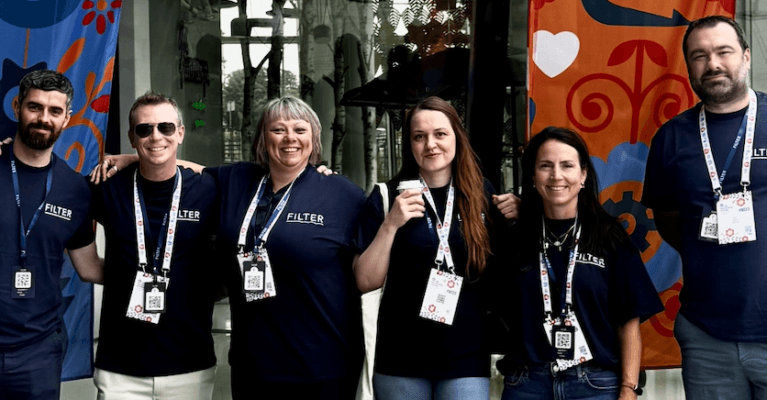
We attended the AWS Partner Summit London at Park Plaza Westminster Bridge earlier this month, a full day of keynotes, breakout sessions and some genuinely useful conversations about where cloud and AI are heading. Here is what stood out.
The opening message was direct: businesses are operating under simultaneous pressure from geopolitical uncertainty, economic headwinds and a productivity imperative. Technology, specifically AI, is how organisations respond. AWS framed this as a shift from asking how to build something, to asking what to build, with AI handling more of the execution layer.
The numbers back it up. 54% of European businesses are currently using AI in a basic capacity, with 22% at an advanced level. The gap between those two groups is where the competitive advantage is being won or lost right now.
The most consistent theme across sessions was the move from generative AI to agentic AI. This is not just about tools that produce content or code, it is about systems that redesign business processes and operate autonomously within defined governance frameworks.
AWS presented its AI-Driven Development Lifecycle (AI-DLC) covering three phases: inception, construction and operation. The approach puts AI as the default first actor at every stage of delivery, with human oversight retained for critical decisions. It includes persona-based AI in software engineering, automated code generation through to CDK and deployment, security agents for code reviews and deep penetration testing and AWS DevOps agents capable of working across on-premise and cloud environments.
The reference implementation is available via GitHub, and AWS are also running AI-DLC workshops for partners wanting to get hands-on with the framework.
Tools such as Kiro (AWS’s AI-native IDE) and AWS Transform were highlighted as practical starting points for partners building this capability into their own delivery.
A dedicated session on Amazon SageMaker covered the infrastructure behind responsible AI at scale. The key message was that the value of generative AI is directly tied to how well an organisation can access and govern its own data. Businesses that have not yet sorted their data strategy will struggle to get meaningful outcomes from AI investment.
The governance framework covered data quality and classification, permissions and access controls, lineage tracking, responsible AI guardrails, and cost logging and monitoring. For any client considering AI at enterprise scale, this is the foundation that needs to be in place first.
Observability also featured, with Dynatrace highlighted for AI token visibility, compliance monitoring and spend management, an increasingly important consideration as AI usage grows across an organisation.
One of the most relevant sessions for how we work with clients focused on the AWS customer success model: Activate, Adopt, Scale, Expand, Retain and Attest. The emphasis was on clarity of ROI at every stage, and speed of execution as a differentiator.
AWS made the case that partners who can operate as strategic advisors, with a proactive blueprint tied to specific business outcomes, are the ones who will grow with their clients over time. Outcome-based accountability, rather than project-based delivery, is the direction of travel.
As an AWS Partner, Filter is well placed to support businesses navigating this shift. Whether that is infrastructure and hosting, AI-readiness assessments, or building towards a more agentic approach to digital delivery, the frameworks and tools are there. What most organisations need is a partner who can translate them into something that works for their specific context.
If you want to talk through what any of this means for your business, get in touch.
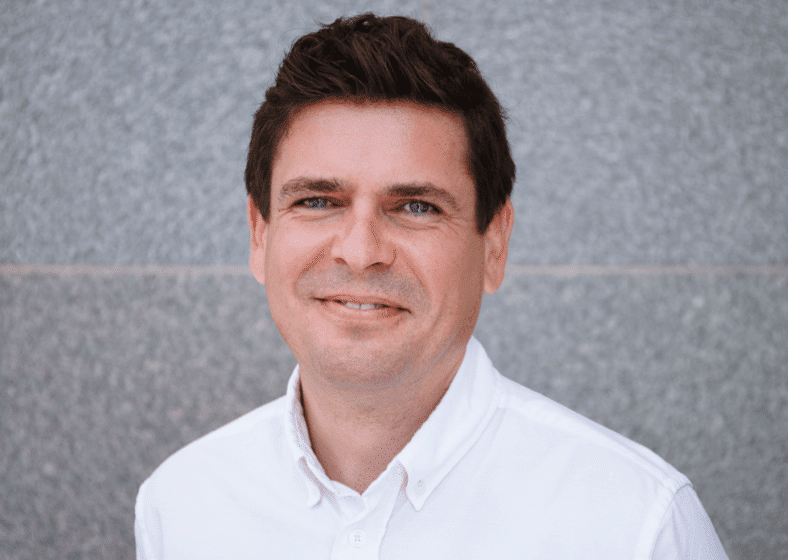
CEO & Founder
An experienced business and digital leader, Olly has an extensive track record of working to develop businesses through smart strategic thinking. With a strong reputation for providing outstanding solutions, he’s an advocate for exacting standards and focusing on performance outcomes.
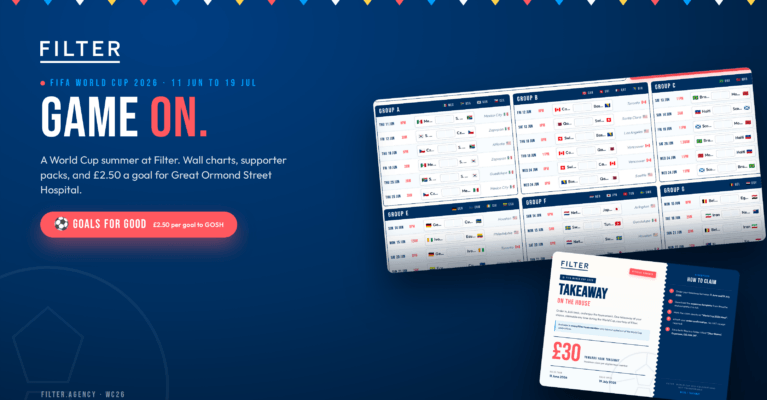
Game On: A World Cup Summer At Filter
Not everyone at Filter follows football. But everyone likes feeling part of something. Here is how we are marking the 2026 World Cup as a team, and the wall chart we built to bring it all together. FIFA World Cup 2026 The 2026 FIFA World Cup kicks off on 11 June and runs through to...