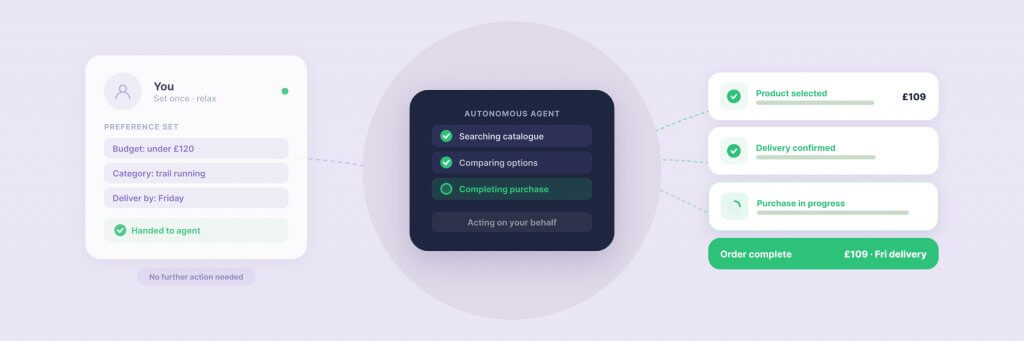
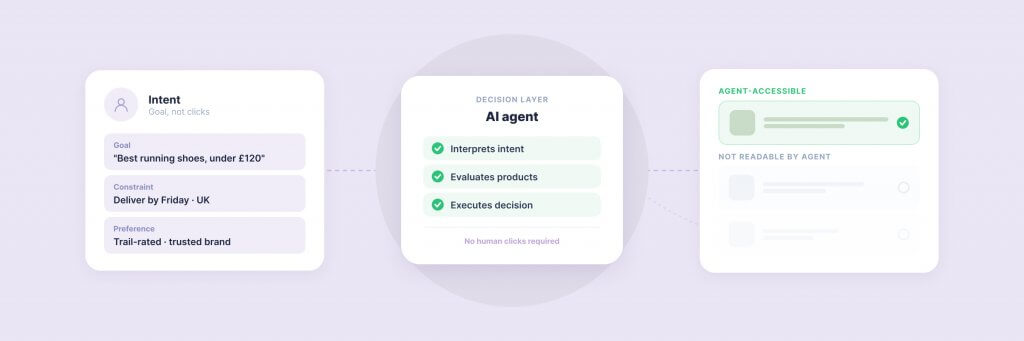
Most brands frame the AI shopping assistant question as a technology question. It isn’t — or at least, that’s the wrong starting point. The real question is a visibility one: when someone asks an AI assistant to help them find a product like yours, do you appear?
During Amazon Prime Day 2025, traffic from AI shopping assistants grew 3,300% year-on-year. Two-thirds of UK and US consumers are now open to using AI assistants for online shopping. Twenty-nine per cent of UK adults plan to use them — rising to 37% among 18-to-34-year-olds. The channel is real, it’s growing fast, and for most brands, their current digital presence doesn’t address it.
This guide sets out what AI shopping assistants are, what they need to recommend your products, and where most brands are falling short.
The AI Shopping Assistant Landscape
“AI shopping assistant” covers a range of different tools, and understanding the distinctions matters for how you approach visibility.
Platform-native assistants
These are the general-purpose AI systems consumers already use — ChatGPT, Google’s Gemini, Perplexity — that have added shopping capabilities. In September 2025, OpenAI launched the Agentic Commerce Protocol (ACP) with Stripe, enabling direct purchasing through ChatGPT. Instacart was the first grocery partner, going live in December 2025; Shopify merchant integration launched in January 2026. Google announced the Universal Commerce Protocol (UCP) in January 2026, with partners including Walmart, Target, and Shopify.
Retailer-built assistants
These are embedded within specific platforms. Amazon’s Rufus fields product questions and comparison requests across the Amazon catalogue. Walmart launched Sparky, its AI shopping assistant — customers who use it have a 35% higher average order value than those who don’t. These tools are built on proprietary data and inventory, and your visibility within them depends on how your product information performs inside that retailer’s ecosystem.
Embedded site tools
AI chat and recommendation systems integrated into individual brand websites — from product FAQs handled by AI to personalised recommendation engines that surface the right product for each visitor.
The practical implication: being visible to AI shopping assistants isn’t one single task. Platform-native assistants depend on your content, entity authority, and product data being accessible across the web. Retailer-built assistants depend on how well your product information is structured within that retailer’s ecosystem. Embedded tools are your own implementation choice.
Most brands have limited direct control over what Rufus or Sparky recommends. But they have significant influence over how they appear to ChatGPT, Gemini, and Perplexity. That’s where the biggest open opportunity sits for most businesses right now.
What Agents Actually Need to Recommend Your Products
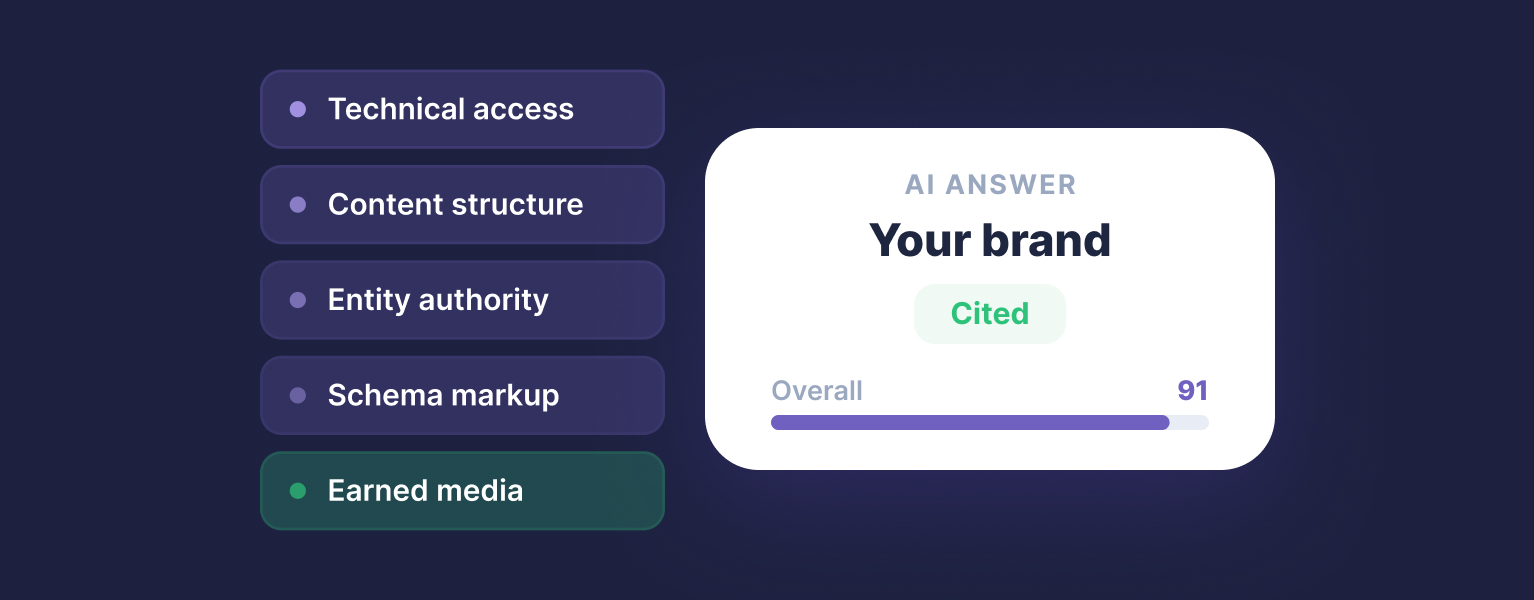
This is where most brands are underinvesting. The requirements for AI shopping assistant visibility are specific, and they differ meaningfully from traditional SEO.
Structured product data comes first. OpenAI’s ACP requires three things from participating brands: a product feed, a checkout API, and a payment integration. That product feed must be comprehensive — titles up to 150 characters, detailed descriptions up to 5,000 characters, correct pricing with currency codes, current availability status, and complete image data. Merchants with comprehensive Product schema markup see 34% higher inclusion in AI shopping features than those without. Stores achieving near-complete attribute completion across their catalogues are seeing three to four times higher AI visibility compared to stores with sparse data.
The key word there is “complete.” Partial data — a product with a title and a price but thin descriptions, missing category attributes, and no reviews — is systematically deprioritised. In a channel where you can’t bid your way into recommendations, data quality is your primary lever.
Reviews and trust signals matter more than most brands expect. AI systems evaluating products on a customer’s behalf are doing the same comparison a careful buyer would do — they weight reviews, weighting recency, volume, and consistency. A product with hundreds of reviews from 2022 doesn’t perform as well as one with steady recent reviews. Treating review generation as an ongoing operational priority, not a launch activity, is increasingly a competitive advantage.
Brand entity signals establish trust at source level. When a consumer asks ChatGPT which brand makes the best kitchen knives for home cooks, the system draws on its understanding of which entities — brands, products, organisations — are authoritative on that topic. If your brand isn’t consistently represented across trusted external sources — publications, review platforms, industry directories — you’re less likely to surface in those answers. Entity-building is increasingly central to AI visibility work, and it complements the technical structured data foundation rather than replacing it.
They won’t — at least, not automatically. Your rankings reflect your visibility to Google’s crawler and algorithm. AI shopping assistants use a different set of signals: structured data quality, entity authority, and direct data integrations via ACP and UCP. A brand ranking in Google’s top three for a category term may still be invisible to an AI shopping assistant if its product data is unstructured, its schema is absent, or it hasn’t registered for the relevant commerce protocols.
The distinction matters strategically. Strong brands with solid technical foundations tend to perform in both channels — but the signals aren’t the same, and the tactics that improve one don’t automatically improve the other. Treating AI shopping visibility as an extension of your existing SEO work will leave gaps. It needs to be addressed in its own right.
“We need a major development project before we can start”
Not necessarily. The immediate priority for most brands — structured data, product schema, ensuring AI crawlers can access your product pages — is often achievable without significant engineering work. Filter AI, our open-source WordPress plugin, handles schema generation and content quality work at scale: it produces structured metadata, alt text, and FAQ schema across large catalogues without requiring custom development for each product.
The bigger investment — direct integration with ACP or UCP, or building a retailer-branded assistant — is a later consideration, and one that requires a meaningful foundation beneath it. Start with the groundwork: ensure your products are findable, your data is complete, and your brand has a clear, consistent identity across the web. That work pays dividends in AI shopping channels and traditional search simultaneously.
When the Assistant Sends Traffic Your Way
Not all AI shopping journeys complete off-site. Platform-native assistants currently surface product recommendations and send traffic to brand or retailer pages for the checkout step. When that traffic arrives, your site is the closing argument.
A consumer who’s been pre-sold by an AI recommendation arrives with high intent and specific expectations. They expect the product they were recommended to be front and centre, priced as quoted, in stock, and straightforward to buy. Friction at this point is disproportionately damaging — the trust the AI built sits on your site’s ability to deliver.
Site speed matters here. Adobe’s analysis of the 2025 holiday season found AI-referred retail visitors converted 31% above the average for other traffic sources. Converting that traffic reliably depends on the same fundamentals as any high-intent visit: fast load, clear product presentation, simple checkout.
Personalisation tools like PersonalizeWP can help ensure that referral traffic — including AI-referred visitors — lands in a tailored experience. Showing the right content based on referral source, product category interest, or prior browsing means that high-intent visitor doesn’t need to do the navigational work of finding what they came for. Our existing article on how to boost website conversion rates covers the on-site side of this in practical detail.
A Brand Readiness Checklist
Rather than a framework, here’s a practical checklist for assessing where you stand:
Schema implementation: Are your products marked up with complete Product schema, including price, availability, and reviews?
Crawler access: Have you verified that AI crawlers — GPTBot, ClaudeBot, GoogleBot, PerplexityBot — can access your product pages? Check your robots.txt and ensure no unintended blocks.
Data completeness: Are product titles, descriptions, and attributes fully populated across your catalogue — not just for your top-selling lines?
Review recency: Do you have an ongoing process for generating fresh reviews, rather than relying on launch-period activity?
ACP/UCP readiness: Have you assessed whether a product feed and checkout API integration is viable for your platform and traffic volume?
Entity presence: Does your brand appear consistently in publications, directories, and review platforms — the external sources AI systems draw on to assess authority?
On-site experience: When AI-referred traffic arrives, does your site load quickly, present the referred product clearly, and complete the conversion without friction?
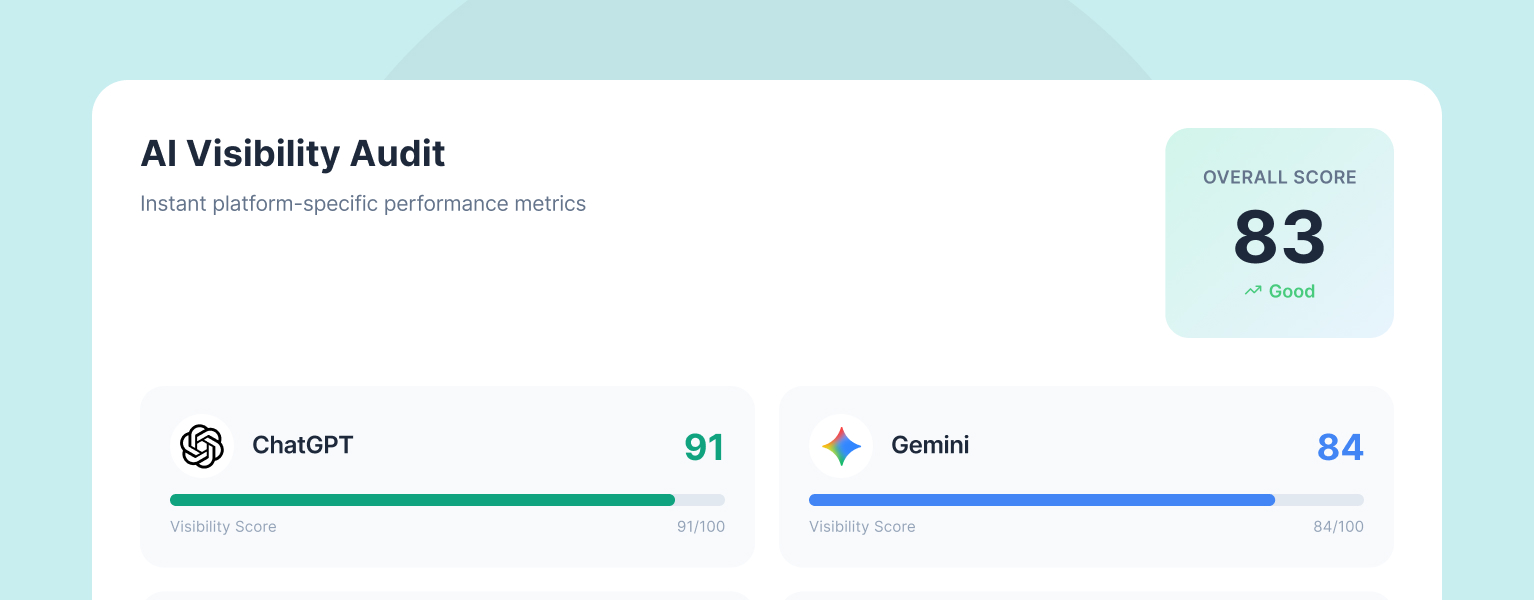
None of these requires a complete re-platform. Most can be addressed incrementally, starting with the highest-impact gaps. Our free LLM AI Optimisation Audit runs your site against the platforms that matter and identifies specifically where you’re visible, where you’re not, and what to prioritise first.
The Definitive Guide to Generative Engine Optimisation
AI shopping assistant visibility builds on the same foundations as broader AI search visibility. Our GEO guide covers the full picture — from technical access and structured data to entity authority and how to measure your results.
How Filter Works with Brands on AI Shopping Visibility
AI shopping assistants sit at the intersection of two things we work on closely: the visibility and structured data work that gets your brand found by AI platforms, and the on-site personalisation and performance work that ensures visits convert. Our article on how AI is changing online retail covers the broader e-commerce context if you’d like the wider picture before focusing on the shopping assistant specifics.
For brands on WooCommerce, the open architecture of WordPress makes it well-suited to AI data protocol integration — you’re not waiting for a platform vendor to support ACP or UCP before you can act. Filter AI handles the schema and structured content work at catalogue scale, and PersonalizeWP ensures that traffic — however it arrives — lands in a tailored, relevant experience.
We’re a WP Engine EMEA Agency Partner of the Year and WordPress VIP Silver Partner, with over 20 years building high-performance WordPress platforms for brands including JD Wetherspoon and Medivet. If you want to understand where your brand stands today, run our free LLM AI Optimisation Audit — or get in touch to talk through what AI shopping readiness looks like for your platform.
Having worked in agencies since he left university, Paul drives both the technical output at Filter, as well as being responsible for planning. His key strengths are quickly understanding client briefs and being able to communicate complex solutions in a clear and simple manner.
Read More
resources
Website Personalisation: The Complete Guide
Most businesses think personalisation means knowing someone's name. The reality is more structural — and considerably more valuable. This guide covers what website personalisation actually involves, how to segment your audience, what to change on your site, and how to build a programme that delivers measurable results.
WordPress Personalisation: How PersonalizeWP Compares
Your WordPress personalisation options range from enterprise DXP platforms costing six figures to free plugins you can install in two minutes. The right choice depends on what you actually need — not what vendors want to sell you. Here is an honest comparison, from the team that built PersonalizeWP.
How Much Does an Enterprise WordPress Website Cost in 2026?
The website development cost UK businesses face for enterprise WordPress ranges from £40,000 to £300,000 — but that range is useless without context. This article breaks down what actually drives the price, what each budget tier delivers, and how to stop comparing quotes that are measuring different things.