It can be hard to know where to start when it comes to personalisation but if you’re using a WordPress CMS, we’ve got a simple solution for you.
Personalisation is becoming increasingly important to both businesses and consumers, with “74% of customers feel[ing] frustrated when website content is not personalised” (LXA).
This shows that personalisation is not a luxury anymore, it’s now a standard expectation. If your business is not implementing personalisation, you’re likely to fall behind your competitors.
This may sound like a complicated task but if you’re a WordPress user, there is an easy solution. With just a few clicks, you can download and install a free plugin that will enable you to create targeted content within the Gutenberg block editor.
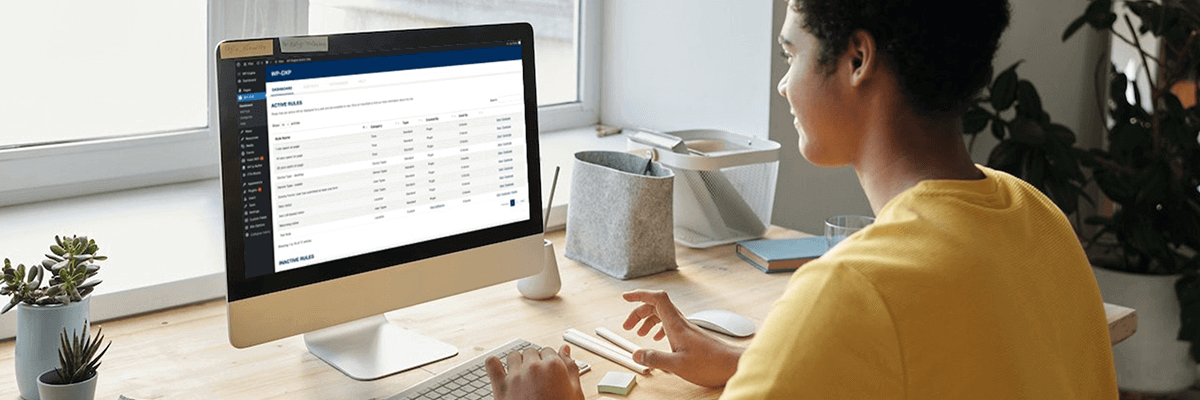
The PersonalizeWP Plugin allows users to show or hide content blocks, according to various conditional rules.
Users can create targeted content depending on the location of the visitor. If you wanted to target international customers, you could easily create a block with an exclusive discount code. Then you would go into the block settings and select the rule which would only show this to visitors who are accessing your website from outside of the UK.
This one may sound complex but this rule allows users to target the information found within the URL Query String. This could be used to target search terms or data on a specific style. For example, if you’re trying to sell more boots ahead of the Autumn/Winter season, you could choose to show a block containing a special offer for this style of shoe to people whose search contains the word ‘boots’.
This rule will be especially useful if you want to target visitors who are spending a long time on a page, but aren’t converting. Users can choose to show a content block after a visitor has been on a specific page, for a certain amount of time. Maybe there is a frequently asked question that needs to be clarified or you could offer a discount code to encourage a purchase.
Users can use this rule to show or hide blocks depending on whether the visitor is new to your website. For example, if the visitor is new, you could show a block prompting them to follow your social media accounts or provide an introductory offer. If the visitor is returning, you could prompt them to sign up to your newsletter list or say ‘Welcome back! Here’s a promo code’.
These are just 4 of the total 14 rules currently available, a full list can be found here.
Our CTO, Paul Halfpenny, continues to work with the Filter development team to build the plugin and make it fully accessible to everyday WordPress users. There are many more updates planned for the near future so make sure to keep an eye on our socials for new release.
To find out more information on our plugin, make sure to visit our PersonalizeWP page or you can go directly to the official WordPress plugin page and you will find instructions for installation.
You can hear more from Paul Halfpenny, our CTO, by connecting with him on LinkedIn or you can click here organise a convenient time for a virtual Filter Coffee.

CTO & Founder
Having worked in agencies since he left university, Paul drives both the technical output at Filter, as well as being responsible for planning. His key strengths are quickly understanding client briefs and being able to communicate complex solutions in a clear and simple manner.
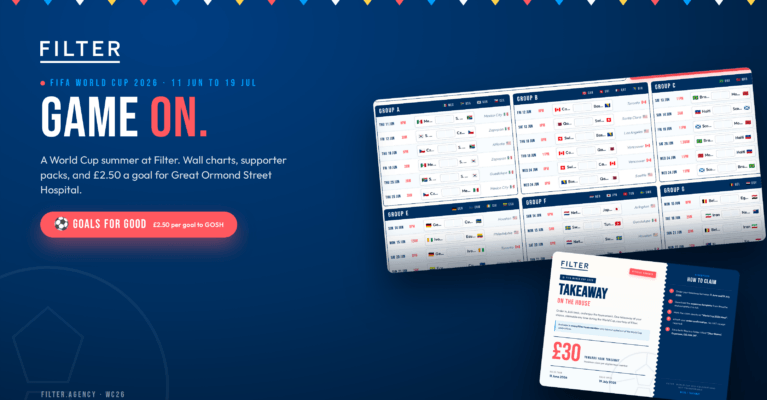
Game On: A World Cup Summer At Filter
Not everyone at Filter follows football. But everyone likes feeling part of something. Here is how we are marking the 2026 World Cup as a team, and the wall chart we built to bring it all together. FIFA World Cup 2026 The 2026 FIFA World Cup kicks off on 11 June and runs through to...