Due to an increase in privacy laws and recent changes which will phase out third-party cookies, it’s important to explore other strategies for data collection.
First Party Data (1PD) is data which is collected directly from your audience, based on behaviours taking place on your own website or app and is often considered the most valuable.
There are other types of data such as Third Party Data which normally comes from an indirect channel existing between the company and its customers. This kind of data is usually collected by an external source and is then organised and sold to companies for marketing purposes.
There are many benefits to 1PD, as it’s sourced directly from existing customers it can be the most reliable data, while being the cheapest option.
It is typically the most reliable data available to you. In most instances, you can collect first-party data at no cost, so it is the least expensive option
Forbes Technology Council
Here are a few useful ways businesses can increase their First Party Data:
One of the most simple and traditional ways to collect 1PD is to create a form within your own website or app, featuring a series of questions and usually a GDPR disclaimer or tick box to acquire the relevant consent. This may require some kind of incentive to generate form submissions, which depending on your business type could include a discount on products or services or some kind of valuable information in return.
Hosting an online event or participating in a conference can be another useful way to increase 1PD, whether you are contributing as a speaker or as an event sponsor. A number of questions can be executed as part of the registration process or as part of a post-event questionnaire. If you are collaborating with another business, you may be able to share data, as long as GDPR guidance is complied with.
If your business has a website or uses online paid advertisements, you may already have an extensive source of 1PD. For example, Google Analytics uses first-party cookies which capture a variety of insights on your audience. In some cases you can view the breakdown of your user audience by demographic factors such as location, age, gender and interests, in addition to referral data – which can tell you where your traffic is coming from.
Joining other platforms can expand the data collected, as most social media profiles have at least some analytical data such as follower location etc.
In conclusion, increasing your first-party data is a powerful strategy that can unlock a world of opportunities for your business. By implementing the tactics outlined in this post, you’ll be on your way to building a robust data foundation, gaining valuable insights, and creating personalised experiences that resonate with your audience. Start leveraging the potential of first-party data today and watch your business thrive in the era of personalisation.
If you have any questions or need further guidance, our team of experts is here to support you every step of the way. Get in touch today to organise a FREE personalisation demo.
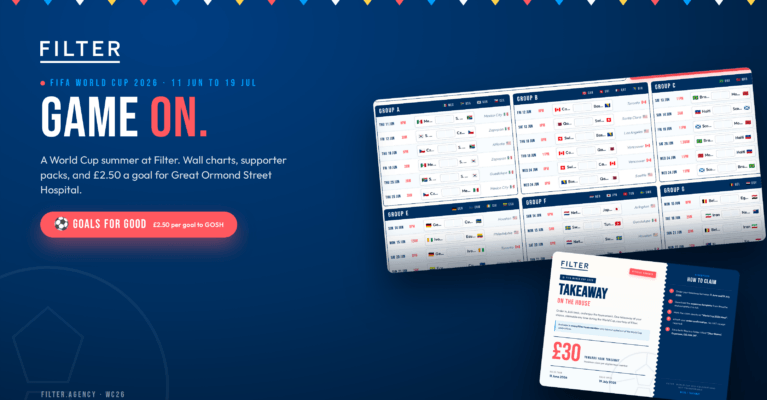
Game On: A World Cup Summer At Filter
Not everyone at Filter follows football. But everyone likes feeling part of something. Here is how we are marking the 2026 World Cup as a team, and the wall chart we built to bring it all together. FIFA World Cup 2026 The 2026 FIFA World Cup kicks off on 11 June and runs through to...