Join us for a deep-dive into the interesting statistics provided by the recent report from We Are Social, exploring how the digital world is evolving in 2023.
As a digital solutions agency, our team are always interested in new developments from within the digital community. That’s why we always enjoy examining reports such as the Digital 2023 Report from We Are Social.
The report shows some surprising changes in consumer behaviour, as well as various digital-centric trends from the past year.
Below, you will find a list of our teams key takeaways and insights from the report:
Although there are approximately 4.76 billion people using Social Media worldwide (which equates to 60% of the population), annual Social Media user growth has actually slowed down to only 3%. This could be due to a wide variety of factors such as Social Media fatigue, declining trust in influencers or audiences prioritising IRL experiences.
Social Media platforms have benefitted greatly from the big shift to digital, accounting for 1 in every $3 spent on digital advertising. Overall, the digital advertisement industry has exploded since the pandemic, with ad spend increasing by 27.7% since 2019.
Surprisingly, data shows that overall people are spending less time online, with a 5% decline, roughly spending 20 minutes less online per day. This could be because of the post-pandemic landscape, where audiences are more aware of their limited time and are more likely to choose quality content. Other reasons to consider are media fatigue and the cost-of-living crisis.
Audiences are now more willing to use e-commerce websites, after being forced to adopt new buying habits during the pandemic. As a result, many have seen the benefits of shopping online and they won’t be turning back! Top consumer goods categories include fashion ($871.2 billion), electronics ($765.7 billion), toys, hobby, DIY ($601.7 billion) and furniture ($387.7 billion).
The report also gives a keen insight into audience behaviours by looking at the reasons people go online. The top reason has recently changed to ‘finding information’ (57.8%) with staying in touch with friends and family at a close second (53.7%). Other reasons include keeping up to date with news and events (50.9%) and watching videos, TV or movies (49.7%).
Mobile phones have been the dominant device for internet usage across the world, while laptops and tablets have been in a steady decline for a few years. However, statistics show that computers (desktop machines and laptops) still continue to dominate online activity within the United States, Canada and the majority of Europe.
These are just a small selection of the data available as part of the extensive report from We Are Social, we highly recommend checking it out for yourself to find your own key takeaways. Click here to go to the full report now.
If you would like to know more about web strategy for mid to enterprise organisations, feel free to get in touch, our dedicated team are always happy to help. Find out how we’ve helped various other businesses by visiting our client stories page.
Before you go, why not connect with Oliver Morrison and Paul Halfpenny on LinkedIn or follow our company page for more day to day updates.
You can also read through our previous news and resource articles for a deeper insight into the digital space.

CEO & Founder
An experienced business and digital leader, Olly has an extensive track record of working to develop businesses through smart strategic thinking. With a strong reputation for providing outstanding solutions, he’s an advocate for exacting standards and focusing on performance outcomes.
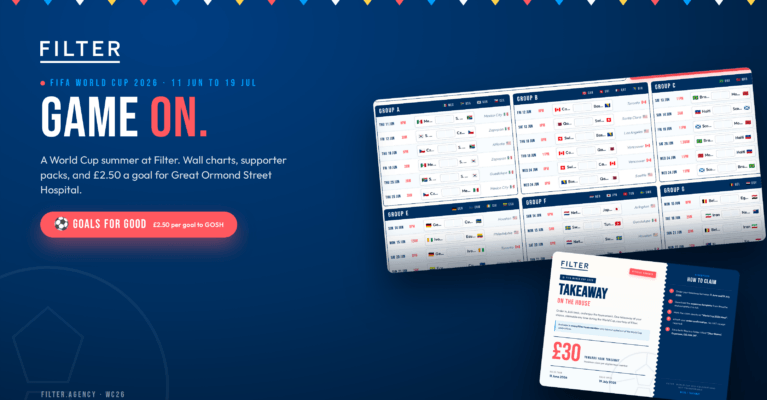
Game On: A World Cup Summer At Filter
Not everyone at Filter follows football. But everyone likes feeling part of something. Here is how we are marking the 2026 World Cup as a team, and the wall chart we built to bring it all together. FIFA World Cup 2026 The 2026 FIFA World Cup kicks off on 11 June and runs through to...