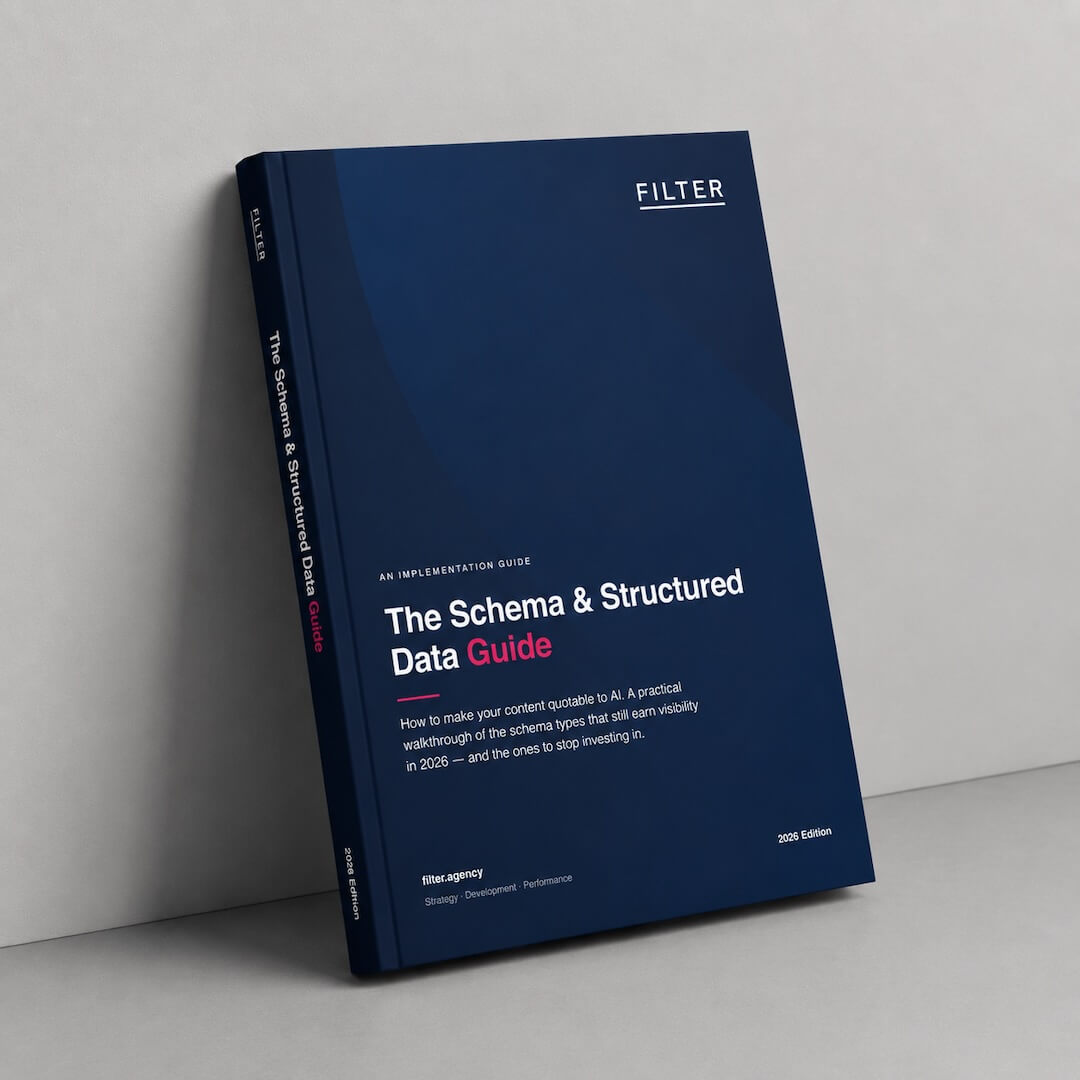
A practical guide for digital leaders and development teams on the structured data that earns visibility now that AI systems, not rich results, decide who gets cited.
"*" indicates required fields
Many agencies will read the FAQ retirement as the cue to stop marking up content. They are wrong. The rich result is gone. The citation is the reward now, and structured content wins it.

Paul Halfpenny
CTO, Filter
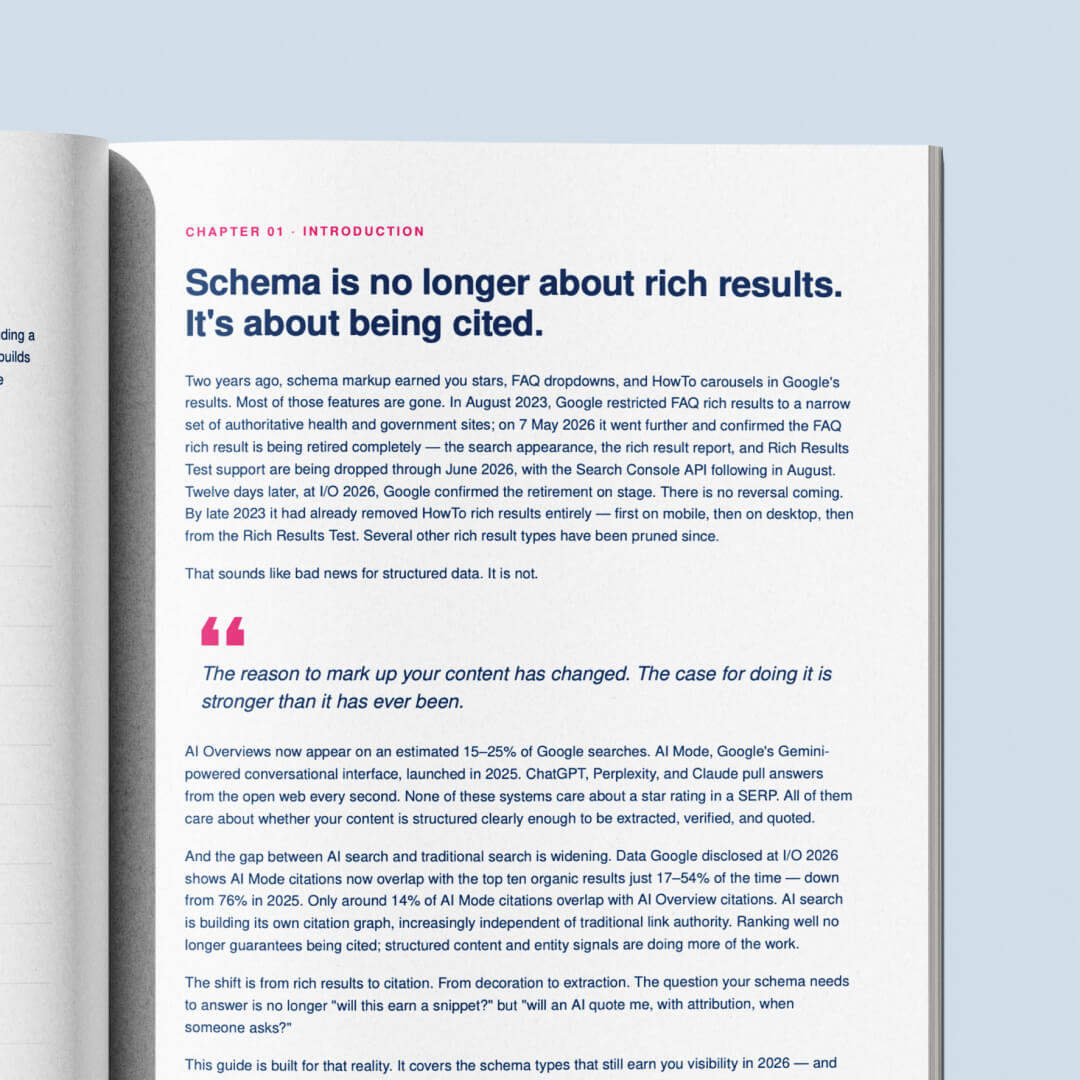
Most of the rich results that schema used to earn are gone. But the reason to mark up content has not disappeared, it has changed.
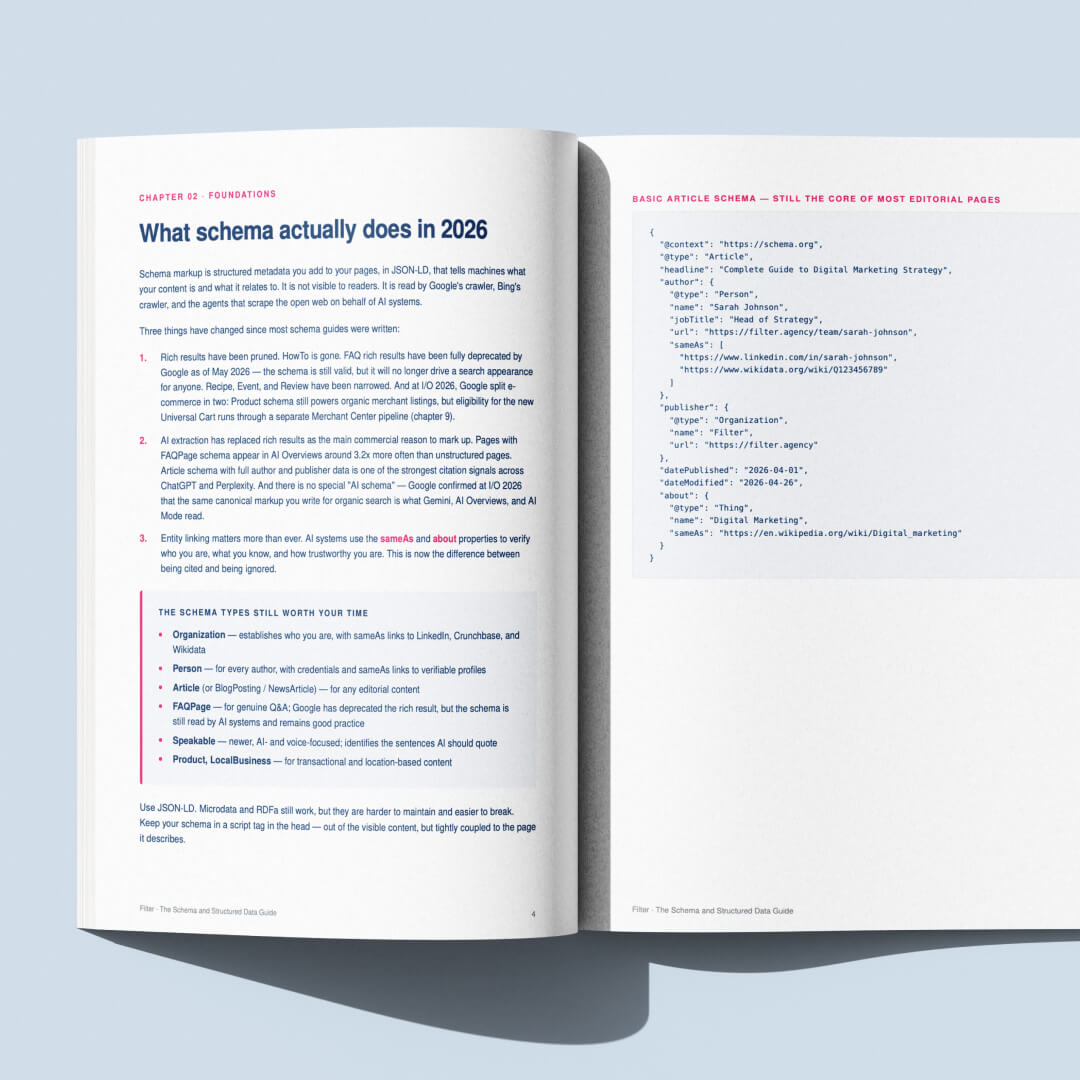
AI Overviews, AI Mode, ChatGPT, Perplexity and Claude all read structured data to decide what to extract, verify and cite. Most sites are not set up for that.
Written by the team at Filter, this guide covers the schema types that still earn visibility, and the ones to stop investing in.
AI search is building its own citation graph, and it is pulling away from traditional ranking. Google disclosed at I/O 2026 that AI Mode citations now overlap with the top ten organic results just 17 to 54% of the time, down from 76% the year before.
Ranking well no longer guarantees being cited. Structured content and entity signals do more of the work now, because they are what the citation graph is built from.
The guide covers both sides. It explains which schema types still matter engine by engine, shows how to write content AI can quote, and sets out the practical steps for getting your site ready.
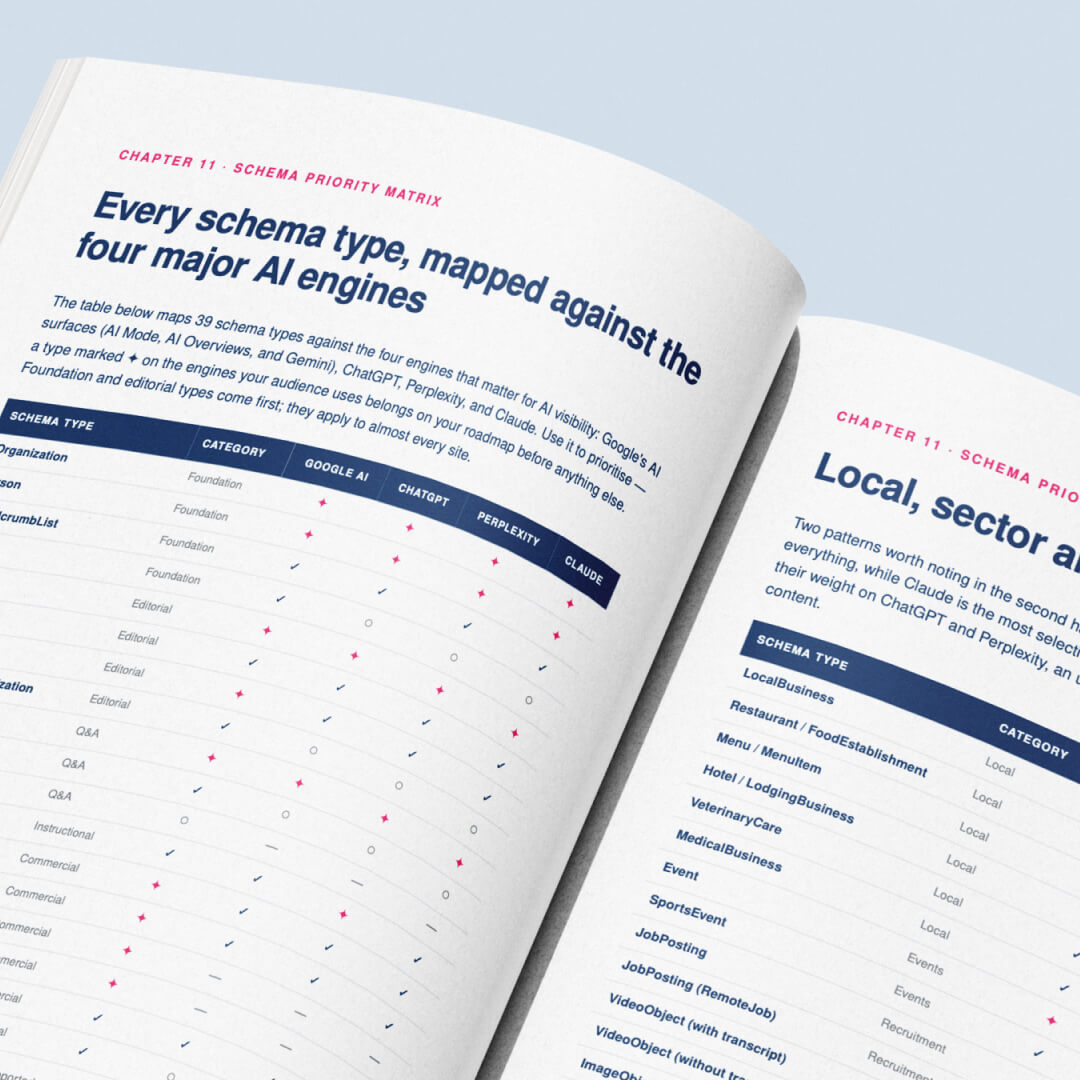
Twelve chapters covering why schema is now about citation rather than rich results, the types still worth implementing, how to measure AI visibility, and a full priority matrix mapping 39 schema types against the four major AI engines.
It also draws on our own work, including how Filter builds answer-first content patterns, author and entity signals, and structured data into every WordPress platform we deliver.